

Bipolar Cable: 3 Premium Connection Features
Product Details
Bipolar Cable for Surgical Electrosurgical Connections
The Bipolar Cable from VOGEL by D.R. Surgicare is a high-frequency electrosurgical connection accessory designed to connect compatible bipolar surgical instruments with suitable electrosurgical generators.
Featuring an advertised dual-insulated conductor design, reinforced strain relief, low-impedance construction, and PTFE insulation, the VOGEL Bipolar Cable is intended to support electrical energy transfer within appropriately configured bipolar electrosurgical systems.
The product overview lists a 2.5-meter cable length and 5A continuous current capacity. These specifications require model-specific verification before they are used to establish electrical compatibility.
For hospitals, operating rooms, laparoscopic surgery centers, biomedical engineers, and medical equipment distributors searching for bipolar electrosurgical cables, bipolar forceps connection leads, surgical generator cables, and laparoscopic bipolar accessories, VOGEL offers a dedicated surgical equipment connection option.
Bipolar Cable for High-Frequency Energy Transfer
The primary function of a Bipolar Cable is to provide an electrical connection between a compatible bipolar instrument and its designated electrosurgical generator output.
In bipolar electrosurgery, electrical energy is delivered through two electrodes incorporated into the surgical instrument.
The cable carries the relevant electrical conductors between the instrument and the generator.
For procurement teams searching for high-frequency bipolar cables, bipolar energy-transfer leads, and electrosurgical connecting accessories, selecting the correct cable is essential.
The cable itself does not generate energy, regulate electrical output, or determine the surgical tissue effect.
Dual-Insulated Bipolar Cable Construction
The VOGEL Bipolar Cable is advertised with dual-insulated conductors.
Electrical insulation is an important feature of high-frequency surgical accessories because the cable assembly must be suitable for its intended operating voltage and environmental conditions.
A bipolar cable normally incorporates distinct electrical pathways serving the instrument's corresponding electrodes.
For hospitals sourcing dual-insulated bipolar cables, bipolar forceps cables, and medical electrical connection leads, insulation design is an important selection consideration.
The exact construction must be confirmed through technical documentation. A dual-insulated description does not independently establish double-insulation compliance under a particular electrical safety standard.
PTFE-Insulated Bipolar Cable
The VOGEL product overview specifies PTFE insulation for its Bipolar Cable.
PTFE, or polytetrafluoroethylene, is a fluoropolymer used in certain electrical insulation applications because suitable formulations provide dielectric and thermal properties.
For electrosurgical cables, the suitability of PTFE depends on the complete construction, insulation thickness, conductor arrangement, and operating conditions.
For healthcare buyers searching for PTFE-insulated bipolar cables, fluoropolymer surgical cables, and high-frequency medical electrical leads, the material provides an important technical reference.
The exact PTFE grade and its location within the cable assembly should be confirmed.
Reinforced Strain Relief at Cable Connections
The Bipolar Cable features advertised reinforced strain relief.
Strain relief is particularly relevant near electrical connectors, where repeated handling may create mechanical stresses.
A reinforced cable-end construction is intended to manage forces associated with normal, approved use and appropriate routing.
For hospitals sourcing reinforced bipolar cables, strain-relief electrosurgical leads, and durable surgical generator accessories, connector-end design is a useful consideration.
Reinforcement does not guarantee prevention of conductor fatigue, cable breakage, or insulation damage.
Low-Impedance Bipolar Cable Design
The VOGEL Bipolar Cable is marketed with a low-impedance design.
Electrical impedance is relevant to how a cable behaves when carrying alternating electrical energy, including the high-frequency waveforms used in electrosurgery.
Impedance depends on conductor construction, cable geometry, material properties, frequency, and connector characteristics.
For biomedical engineers seeking low-impedance bipolar cables, high-frequency surgical leads, and electrosurgical connection accessories, documented electrical performance is important.
The product should not be advertised as having a guaranteed impedance value or negligible energy loss without supporting measurements.
2.5-Meter Bipolar Cable for Operating-Room Setup
The VOGEL product page lists a 2.5-meter Bipolar Cable.
Cable length is important when arranging an electrosurgical generator and connected surgical instruments in the operating room.
An appropriate length should provide sufficient reach without placing unnecessary tension on electrical connections.
For healthcare facilities searching for 2.5m bipolar cables, 2.5-meter surgical generator leads, and laparoscopic electrosurgical cables, this is a useful purchasing specification.
D.R. Surgicare's associated catalogue lists a 1-meter configuration, so the supplied length should be confirmed before ordering.
5A Continuous Bipolar Cable Rating
The VOGEL Bipolar Cable is advertised with a 5A continuous current capacity.
This rating should be established through electrical testing appropriate to the complete cable assembly.
Continuous current capacity is different from a brief peak current rating and must be considered alongside the electrical waveform, operating temperature, connector design, and voltage rating.
For procurement teams comparing 5A bipolar cables, high-current electrosurgical leads, and bipolar instrument connecting cables, supporting test information is essential.
A published 5A rating does not mean that the cable is compatible with every electrosurgical generator or high-energy surgical mode.
Standard Bipolar Plug Connection
The VOGEL Bipolar Cable is described with a standard bipolar plug.
However, bipolar instruments and electrosurgical generators are manufactured with different electrical connector configurations.
These may include two-pin connections, flat bipolar plugs, cylindrical contacts, and manufacturer-specific interfaces.
For buyers searching for standard bipolar cable connectors, bipolar forceps plugs, and electrosurgical generator adapters, both connection ends must be identified.
An apparently matching plug does not independently establish suitable electrical compatibility.
Bipolar Cable for Bipolar Forceps
The Bipolar Cable is relevant to compatible bipolar surgical forceps.
Bipolar forceps are used in suitable electrosurgical procedures for controlled tissue coagulation.
The cable provides the electrical connection between the designated generator output and the corresponding forceps interface.
For hospitals seeking bipolar forceps cables, bipolar coagulation leads, and surgical forceps connecting cables, the exact instrument connection is particularly important.
The product should be selected according to the forceps model and the generator manufacturer's approved accessory requirements.
Bipolar Cable for Surgical Coagulation
The VOGEL Bipolar Cable is intended for suitable bipolar electrosurgical coagulation procedures.
In an appropriate bipolar system, the generator delivers high-frequency energy through the connected surgical instrument.
The tissue effect depends on the generator settings, electrode configuration, tissue characteristics, and clinical technique.
For surgical departments sourcing bipolar coagulation cables, electrosurgical forceps accessories, and precision surgical energy leads, the complete system must be compatible.
The cable does not independently guarantee safe coagulation or a particular surgical outcome.
Bipolar Cable for Laparoscopic Surgery
The VOGEL Bipolar Cable may be considered for suitable laparoscopic bipolar instruments.
Minimally invasive surgical equipment may include bipolar graspers, forceps, dissectors, and other compatible energy-based instruments.
The connecting cable must be suitable for the instrument's electrical interface and the generator's intended bipolar output.
For hospitals searching for laparoscopic bipolar cables, minimally invasive electrosurgical accessories, and bipolar laparoscopic forceps leads, model-specific selection is essential.
The same cable should not automatically be used with every laparoscopic bipolar instrument.
Bipolar Cable for General Surgery
The Bipolar Cable may also be used with appropriate bipolar equipment in selected general surgical procedures.
Bipolar electrosurgery is employed where the approved surgical technique requires energy delivery between an instrument's electrodes.
For hospital procurement teams seeking general surgery bipolar cables, operating-room electrosurgical leads, and reusable surgical electrical accessories, equipment-specific compatibility must guide the purchase.
Bipolar Cable for Gynecological Surgery
The VOGEL Bipolar Cable may be considered for compatible electrosurgical instruments used during selected gynecological procedures.
The appropriate cable depends on the generator and instrument model, rather than the surgical specialty alone.
For medical equipment buyers sourcing gynecology bipolar cables, laparoscopic gynecology electrosurgical leads, and bipolar forceps accessories, confirming both connection interfaces is essential.
Bipolar Cable for Urology
Suitable urological bipolar instruments may require a dedicated bipolar electrical connection.
Where the intended generator and instrument specifications match, an appropriate bipolar cable forms part of the electrosurgical system.
For hospitals seeking urology bipolar cables, surgical coagulation leads, and bipolar electrosurgical accessories, the exact equipment configuration must be identified.
The standard VOGEL Bipolar Cable should not be assumed interchangeable with a TURP-specific resectoscope cable.
Bipolar Cable vs Monopolar Cable
The Bipolar Cable and Monopolar Cable belong to different electrosurgical configurations.
A Bipolar Cable connects compatible bipolar surgical instruments to a designated bipolar generator output.
A Monopolar Cable connects a suitable active monopolar instrument to its corresponding generator output.
In typical monopolar electrosurgery, a separate patient return-electrode system is used to complete the current pathway.
For healthcare procurement teams comparing bipolar and monopolar electrosurgical cables, the correct electrical configuration must be established.
These accessories should not be substituted for one another.
Bipolar Cable vs BOWA Type Bipolar Cable
VOGEL offers a separate Bipolar Cable BOWA Type.
The BOWA Type cable is marketed for compatible BOWA electrosurgical equipment and has a separately advertised connection configuration.
The standard VOGEL Bipolar Cable is marketed more generally for compatible bipolar surgical instruments.
For hospitals comparing standard bipolar cables and BOWA-type bipolar cables, the differences in connector geometry, electrical ratings, and supported equipment should be confirmed.
Bipolar Cable vs LNT Type Bipolar Cable
The Bipolar Cable LNT Type is another separately listed VOGEL accessory.
The LNT Type is marketed for designated LNT-type generator connections and has its own published material and cable-length characteristics.
The standard Bipolar Cable is a different product and should not be treated as automatically compatible with LNT systems.
For buyers searching for LNT bipolar cables, standard bipolar leads, and electrosurgical generator cables, the correct model must be selected according to the equipment.
Bipolar Cable vs BI-Clamp Cable
The VOGEL BI-Clamp Cable is marketed for compatible advanced bipolar vessel-sealing systems.
A standard Bipolar Cable is intended for appropriate conventional bipolar instruments and generator connections.
Advanced vessel-sealing systems may have different connector designs and energy-delivery requirements.
For medical procurement teams comparing bipolar forceps cables, vessel-sealing cables, and surgical energy leads, the manufacturer's approved equipment combination is essential.
A standard bipolar cable must not be substituted for a vessel-sealing cable unless the complete system is confirmed compatible.
Bipolar Cable vs TURP Bipolar Cable
The TURP Bipolar Cable is a separate VOGEL accessory intended for compatible transurethral resection systems.
TURP equipment commonly uses specialized resectoscope working elements and generator connection arrangements.
For hospitals purchasing bipolar TURP cables, resectoscope cables, and standard bipolar coagulation leads, these products should remain clearly differentiated.
The correct cable depends on the actual generator and surgical instrument.
Autoclavable Bipolar Cable Connectors
The VOGEL Bipolar Cable advertises autoclavable connectors.
For a reusable electrical accessory, cleaning and sterilization compatibility must be validated for the entire cable assembly—not merely the connector bodies.
The complete assembly may contain insulating polymers, metal contacts, seals, strain-relief components, and other materials with different reprocessing limitations.
For CSSD teams sourcing autoclavable bipolar cables, reusable electrosurgical cables, and sterilizable surgical accessories, the exact processing instructions are important.
The product should not be marketed as suitable for unlimited sterilization cycles without supporting evidence.
Reusable Bipolar Cable Maintenance
D.R. Surgicare's related catalogue describes its laparoscopic Bipolar Cable as reusable.
Reusable electrical accessories should be inspected for visible mechanical and electrical defects according to their manufacturer's instructions.
Areas requiring attention include insulation, connector contacts, cable ends, and strain-relief sections.
For biomedical engineering teams sourcing reusable bipolar cables, electrosurgical replacement leads, and surgical cable maintenance accessories, documented care instructions are essential.
Damaged or unsuitable cables should not be connected to an energized electrosurgical generator.
Bipolar Cable Electrical Safety Considerations
The Bipolar Cable should be evaluated as part of a complete high-frequency surgical system.
Important factors include the generator's output characteristics, maximum accessory voltage, instrument connection, cable insulation, and intended modes of operation.
For hospitals sourcing medical electrical accessories, high-frequency bipolar leads, and surgical energy connection cables, electrical test documentation is a valuable procurement requirement.
A cable's current rating alone does not establish suitability for every generator or surgical mode.
Choosing the Correct Bipolar Cable
Before purchasing a Bipolar Cable, hospital procurement teams should identify the exact generator and bipolar instrument models.
Important specifications include generator-side connector, instrument-side connector, cable length, insulation material, conductor arrangement, rated accessory voltage, permissible current, reuse classification, and validated cleaning or sterilization instructions.
For distributors seeking bipolar electrosurgical cables, laparoscopic bipolar connecting leads, and replacement surgical generator accessories, complete technical information supports accurate ordering.
VOGEL Bipolar Cable Supplier in India
VOGEL by D.R. Surgicare offers surgical instruments and medical equipment accessories to hospitals, surgical centers, operating rooms, biomedical engineering departments, medical distributors, and institutional procurement teams.
The VOGEL Bipolar Cable is part of its electrosurgical accessory portfolio, alongside Bipolar Cable BOWA Type, Bipolar Cable LNT Type, BI-Clamp Cable, TURP Bipolar Cable, Monopolar Cable, and Cautery Pencil.
For buyers searching for Bipolar Cable suppliers in India, electrosurgical cable manufacturers, laparoscopic bipolar cable distributors, and surgical generator connection accessories, VOGEL provides product information and institutional quotation support.
Explore Related VOGEL Electrosurgical Accessories
Browse the VOGEL Medical Accessories collection for bipolar cables, monopolar cables, and other surgical equipment accessories.
Compare the VOGEL Bipolar Cable BOWA Type for a separately listed BOWA-type generator connection configuration.
Explore the VOGEL Bipolar Cable LNT Type for compatible LNT-type equipment connections.
View the VOGEL BI-Clamp Cable for a separate accessory marketed for compatible vessel-sealing systems.
Compare the VOGEL TURP Bipolar Cable for resectoscope-specific bipolar equipment.
Explore the VOGEL Monopolar Cable for a different electrosurgical circuit configuration.
View the VOGEL Cautery Pencil for a related monopolar electrosurgical handpiece.
Browse the VOGEL Laparoscopy Instrument Range for bipolar forceps and other surgical instruments.
Read VOGEL's article on common mistakes in surgical instrument selection for hospital procurement considerations.
Request a quotation from VOGEL for the Bipolar Cable, confirmed length, connector specifications, electrical ratings, reprocessing instructions, and institutional purchasing requirements.
Connect with VOGEL by D.R. Surgicare on LinkedIn for surgical instrument and medical equipment updates.
Package contents for Bipolar Cable: 3 Premium Connection Features have not been specified. Please confirm the supplied items and accessories before ordering.
For shipping, returns and applicable conditions, please read our Returns & Refunds Policy.
Are these instruments autoclavable?
Yes. Every VOGEL instrument is fully autoclavable and built for repeated sterilization cycles.
Do you supply in bulk to hospitals and distributors?
Yes. Institutional and distributor pricing is available — contact our sales team with your requirement list.
Is a GST invoice provided?
A GST-compliant invoice is issued with every order.
Related products
 SALESAVE 4%Accessories
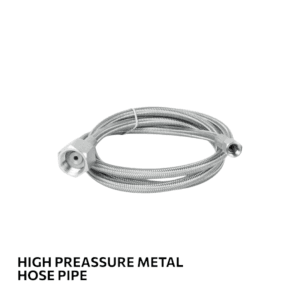
High Pressure Metal Hose Pipe: 3 Premium Design Features
Original price was: ₹13,000.₹12,500Current price is: ₹12,500.Save₹500- SALESAVE 23%Accessories
Silicon Oil: 2 Premium Bottle Sizes for Maintenance
Original price was: ₹845.₹650Current price is: ₹650.Save₹195 - SALESAVE 3%Accessories
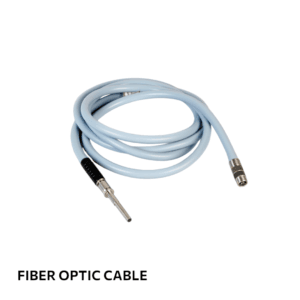
Fiber Optic Cable: 3 Premium Features for Endoscopy
Original price was: ₹16,000.₹15,500Current price is: ₹15,500.Save₹500