


A detailed selection framework for teams comparing needle-holder patterns and ordering configurations.
Explore the 7 buying checks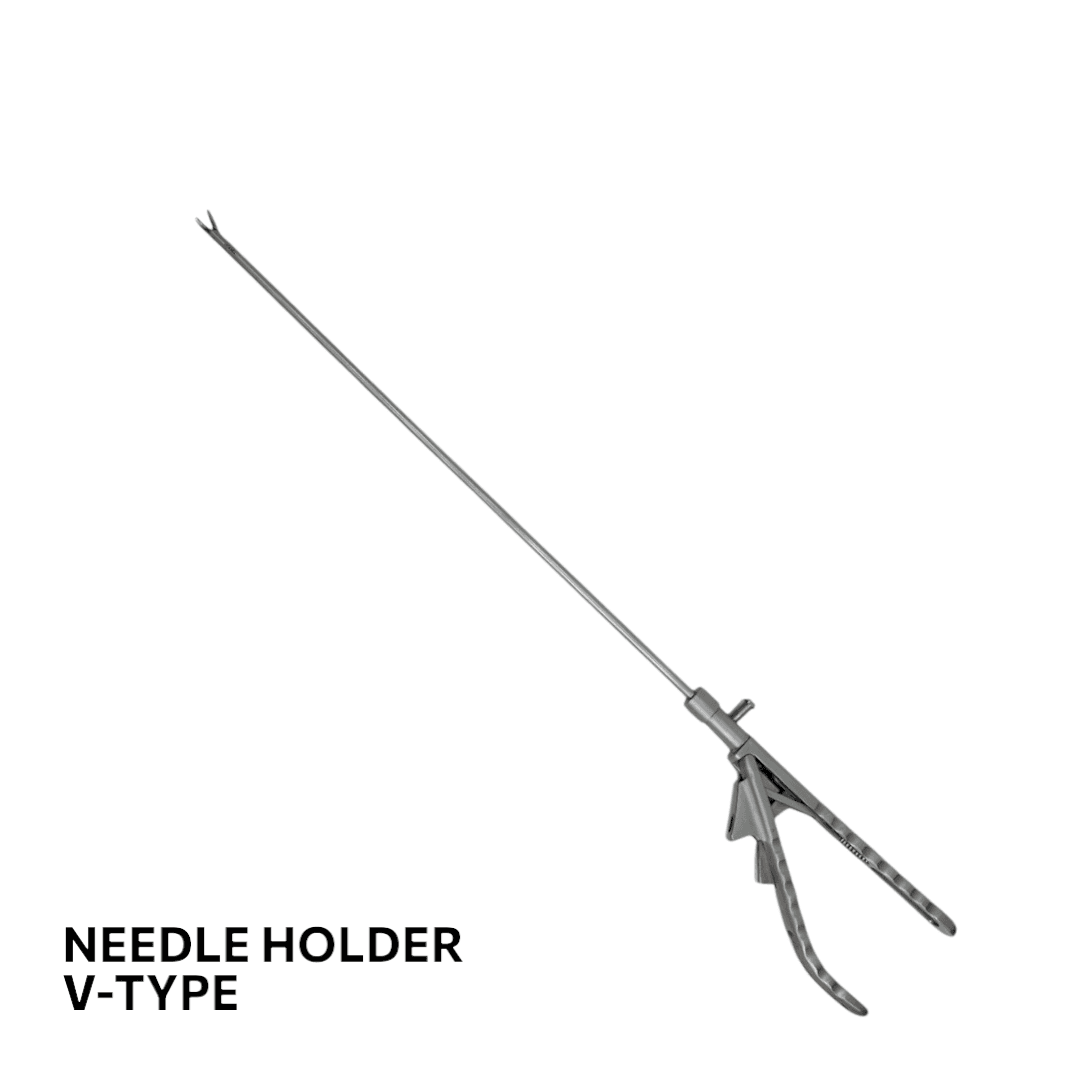
Laparoscopic needle holder selection is a procurement decision that must begin with a clinician-approved specification, not a guess based on handle appearance. A hospital may ask for a needle holder by category name alone, but the final purchase needs a clear working-end pattern, expected needle compatibility, mechanism and exact system dimensions.
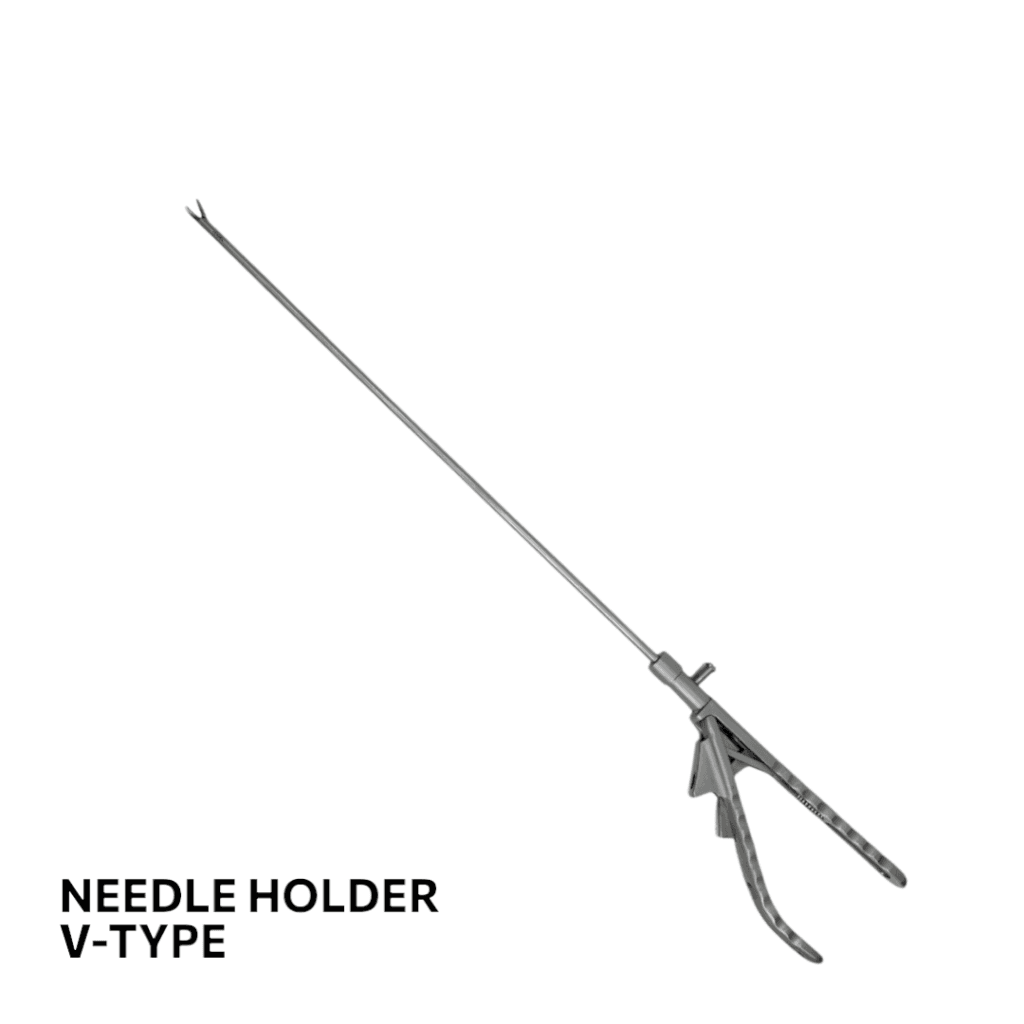
The VOGEL laparoscopy range includes needle-holder families, and VOGEL’s media library contains V-type and L-type needle-holder catalog photographs. Those names and images help a buyer locate options; they do not independently confirm the gripping geometry, needle range, clinical performance or interchangeability of the exact variant. This guide offers seven practical questions for a safe and precise purchase request.
laparoscopic needle holder selection: an evidence-first approach
A detailed selection framework for teams comparing needle-holder patterns and ordering configurations. The value of a well-written specification is not the number of technical terms it contains. It is whether a clinical reviewer, a purchasing officer and the supplier can agree on one identifiable product and what evidence is required before that product is accepted.
Search results and catalogue images can introduce relevant products, but product names may refer to families with multiple versions. A thorough purchase request should therefore be tied to the current model and its documented compatibility, accessories, handling requirements and processing instructions. If the documentation is not accessible, the buying team should seek it before ordering rather than infer technical performance.
Laparoscopic needle holder selection: 7 essential checks
1. Begin with the approved clinical requirement
Before comparing catalogue products, obtain the required needle-holder pattern from the surgeon or department lead. The purchasing team should record the intended procedural context at the category level only as needed to identify the approved equipment; a general blog must not choose a needle holder for a patient or teach suturing technique.
Ask whether the request replaces an existing approved instrument or forms part of a new set. Replacement purchases often need compatibility with the hospital’s established handles, port systems and processing workflow. New purchases need a more complete bill of materials and written review.
2. Check the working end and required needle compatibility
The working-end design is central to needle-holder selection, yet a product family’s name does not prove which needle shapes or sizes are supported. Ask the supplier for precise, model-specific drawings or specifications, and have the clinical user confirm the documented requirements.
Compare jaw length, contact surfaces and any needle-size limitations only when those details are provided in the manufacturer’s current data. Do not publish unsupported claims that one jaw design always prevents needle rotation or guarantees a stronger grip.
3. Distinguish named patterns without inventing their performance
VOGEL lists V-type and L-type needle-holder imagery in its own media library. Those are useful catalogue identifiers and can guide a technical enquiry. They should not be turned into unsupported claims that a particular pattern is designed for every suture type or that one shape must be used for a particular operation.
When the institution compares these named patterns, request current technical drawings, applicable model numbers and intended-use wording. The surgeon should inspect or review the proposed instrument against the approved requirement before purchase.
4. Verify shaft diameter and working length
Ask for the exact ordered shaft diameter, working length and connection configuration. A nominal dimension may be necessary for procurement, but it does not by itself establish full fit with a trocar, handle or accessory. Avoid relying on image proportions because product photographs are not to scale.
Buyers should also record relevant operational constraints such as the access platform already installed in the department. Have the technical team verify the complete configuration using written manufacturer information rather than making assumptions about cross-brand compatibility.
5. Clarify handle and ratchet mechanisms
An instrument may have a particular grip or locking arrangement, but that mechanism needs to match the clinical request. Buyers should not assume that a ratchet automatically improves precision or decreases fatigue. These outcomes depend on the exact product, its approved use and the individual user.
Ask for clear details on engagement, release, connector compatibility and whether a particular handle is included. A needle-holder assembly should be purchased and reviewed as an identifiable combination, not a list of interchangeable-looking components.
6. Check cleaning, inspection and reuse instructions
Where the chosen model is reusable, the sterile-processing department needs its validated IFU before accepting the new device. The processing team should confirm that the facility can implement the documented procedures and assess any model-specific assembly and functional inspection requirements.
Generic advice to “autoclave as usual” is insufficient. The FDA notes the importance of appropriate, understandable reprocessing instructions. The hospital should follow the current manufacturer-specific directions and its approved facility procedures, not a blog’s suggested temperature or cycle.
7. Require a complete RFQ and approval trail
A well-prepared request for quotation names the exact instrument, its configuration, the quantity, accessories, technical documents, delivery expectations, service provisions and responsible reviewers. This can prevent substitutions that are only superficially similar.
Before placing an order, have the purchasing office and the responsible clinical and sterile-processing teams review any deviations from the approved specification. A clear written record will be more useful than a price comparison that omits the actual supplied components.
laparoscopic needle holder selection: procurement comparison table
This table summarizes questions worth asking a supplier and the responsible internal reviewer. It does not assign a clinical indication, instrument performance rating or safety ranking to any device.
| Buying question | Evidence to request | Decision owner |
|---|---|---|
| What jaw pattern? | Exact working-end drawing and model number | Clinical team |
| Which compatible needles? | Manufacturer-stated needle/working-end limitations | Clinical team |
| Which dimensions? | Shaft, length and component specifications | Clinical and technical team |
| Which handle arrangement? | Connector and locking/ratchet details | Clinical and biomedical team |
| How will it be processed? | Current validated IFU and service information | Sterile-processing team |
Explore original VOGEL instrument photographs
The two photographs below are original VOGEL media-library images. Their product shapes, handles, shafts and tips are not redrawn. They are examples for catalogue identification only; exact SKU identity and current manufacturer specifications should be confirmed before using the images in a purchase specification.
Original, unaltered VOGEL product photo. Exact configuration, indicated use, specifications and compatibility require the applicable model documentation.
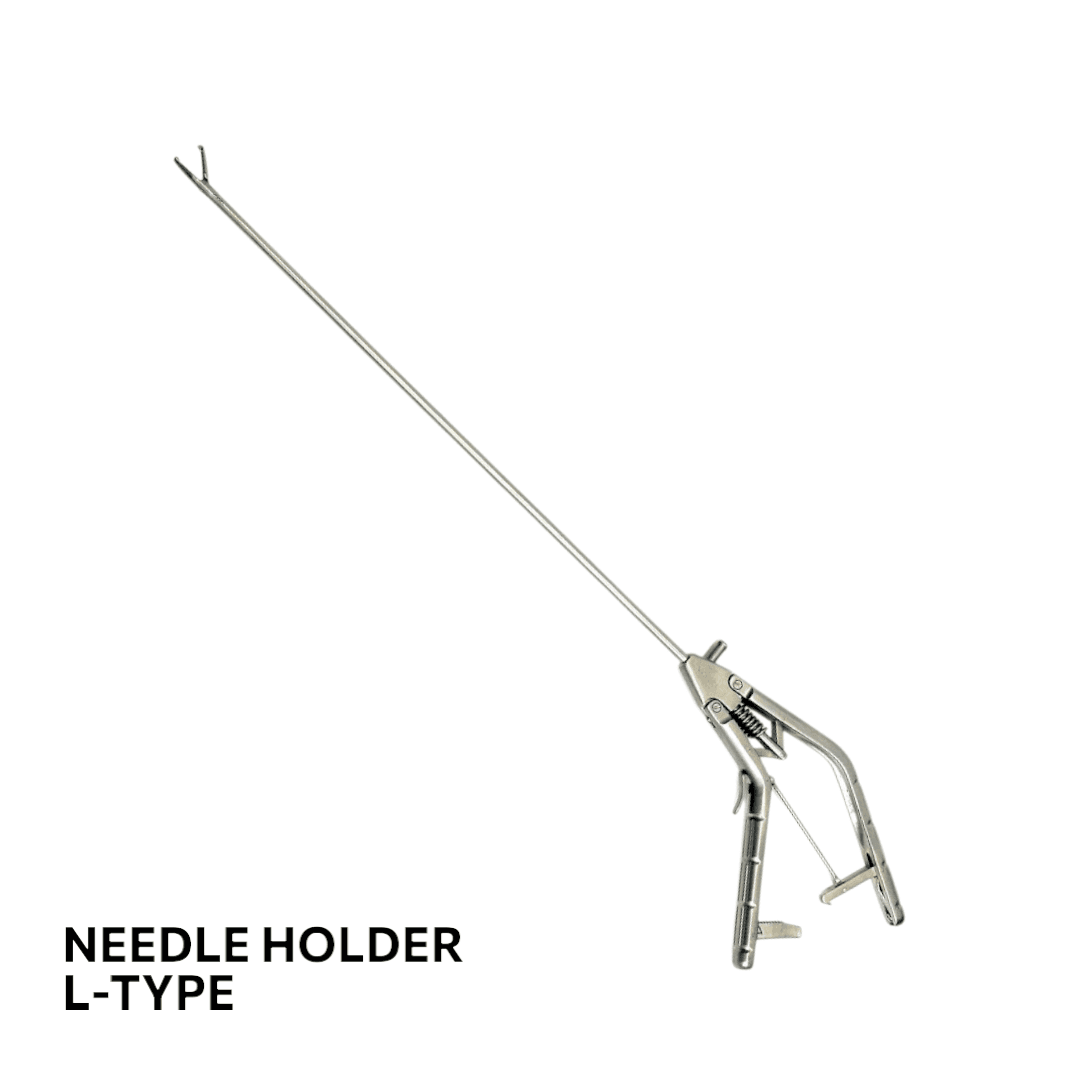
Original, unaltered VOGEL product photo. Exact configuration, indicated use, specifications and compatibility require the applicable model documentation.
Explore the verified VOGEL laparoscopy range to identify available instrument families. For a configuration-specific enquiry, contact VOGEL with a written list of the items, dimensions and documents needed.
How to handle a V-type versus L-type purchase request
Suppose two departments ask for “a laparoscopic needle holder,” but one purchase request specifies V-type and the other L-type. The correct response is not to choose the pattern that looks more familiar in a photograph. Ask both departments to confirm the intended model, working-end requirements and compatibility conditions in writing.
VOGEL can then be asked for variant-specific documentation and a quotation identifying exactly what will be supplied. The choice remains with qualified clinical users; the purchasing office checks that the paperwork, configuration and order match that decision.
Laparoscopic needle holder selection: document the exact model
For laparoscopic needle holder selection, start with a written request from the clinical team that identifies the intended instrument configuration rather than only a family name. The V-type and L-type labels in a supplier catalogue are useful for finding candidate models; they are not substitutes for the working-end details, dimensions, intended use and compatibility statements supplied for the specific item.
When comparing needle-holder offers, ask for the manufacturer-approved description of the gripping surface, relevant dimensions, locking mechanism where present and compatible shaft or handle combination. Whether the instrument suits a particular needle or suture is a model-specific clinical question. The purchasing team should obtain documented confirmation instead of inferring a needle range from the appearance of the jaws.
A thorough laparoscopic needle holder selection record also makes replacement purchasing easier. Keep the exact order code, included components, latest product documentation and an internal approval note together. If an existing needle holder has become unsuitable for reuse, record its inspection or maintenance disposition independently of the new product purchase; the blog is not a device-failure diagnostic procedure.
- Request a clear description of what is included in the supplied handle and working-end configuration.
- Ask for model-specific instructions for use and any permitted reprocessing information.
- Keep written confirmation of compatibility and any surgeon-approved substitution.
Review the VOGEL reusable laparoscopic instruments inspection checklist alongside the purchasing record. The inspection article addresses documentation and escalation, while this laparoscopic needle holder selection guide addresses the purchase decision.
Hospital request-for-quotation checklist
Before the order is placed, record these six actions and make the necessary clinical and technical approvals part of the purchase process. This makes the final bill of materials more useful than an informal email listing only a category name.
A documented laparoscopic needle holder selection request should state the approved pattern, dimensions, included components and model-specific compatibility evidence. Obtain clinical confirmation of the intended configuration before comparing supplier quotations.
- Get approval for the requested pattern before seeking a substitute.
- Record the exact ordered needle-holder SKU and included components.
- Verify working-end compatibility rather than relying on a family name.
- Confirm dimensions and interfaces using documented specifications.
- Get the current manufacturer’s IFU for reusable instruments.
- Retain the clinical sign-off and any written substitution approval.
Confirm the final quotation against the approved requirement, not merely the number of products listed. Any proposed substitution should be documented with the reason for the change and reviewed by the responsible clinical and technical teams. Product availability, prices and delivery terms should be confirmed directly with VOGEL for the specific order.
Sources and technical references
VOGEL links below are product and enquiry resources only. External FDA guidance is cited solely for general reusable-device documentation principles; it does not certify VOGEL products or establish regulatory approval outside the applicable jurisdiction.
Frequently asked questions
What does laparoscopic needle holder selection involve?
It involves defining the clinically required pattern and working end, verifying exact dimensions and compatible components, obtaining the applicable IFU and confirming the supplied model before purchasing.
Is a V-type needle holder automatically preferable to an L-type?
No. The labels distinguish catalogue patterns, but the suitable instrument depends on the exact model’s documented characteristics and the responsible clinician’s approved requirements.
Can a needle holder fit any laparoscopic trocar of the same nominal diameter?
That cannot be assumed. Confirm the complete system compatibility, including any relevant access and accessory requirements, from the manufacturer.
Should hospitals buy needle holders by brand image alone?
No. A photograph can help identify a product family but is not a reliable source for needle compatibility, dimensions, intended use or processing instructions.
Where can hospitals request VOGEL needle-holder information?
Use VOGEL’s laparoscopy catalogue and contact page to request a model-specific specification and quotation for the proposed configuration.