
BI-Clamp Cable: 3 Premium Connection Features
Product Details
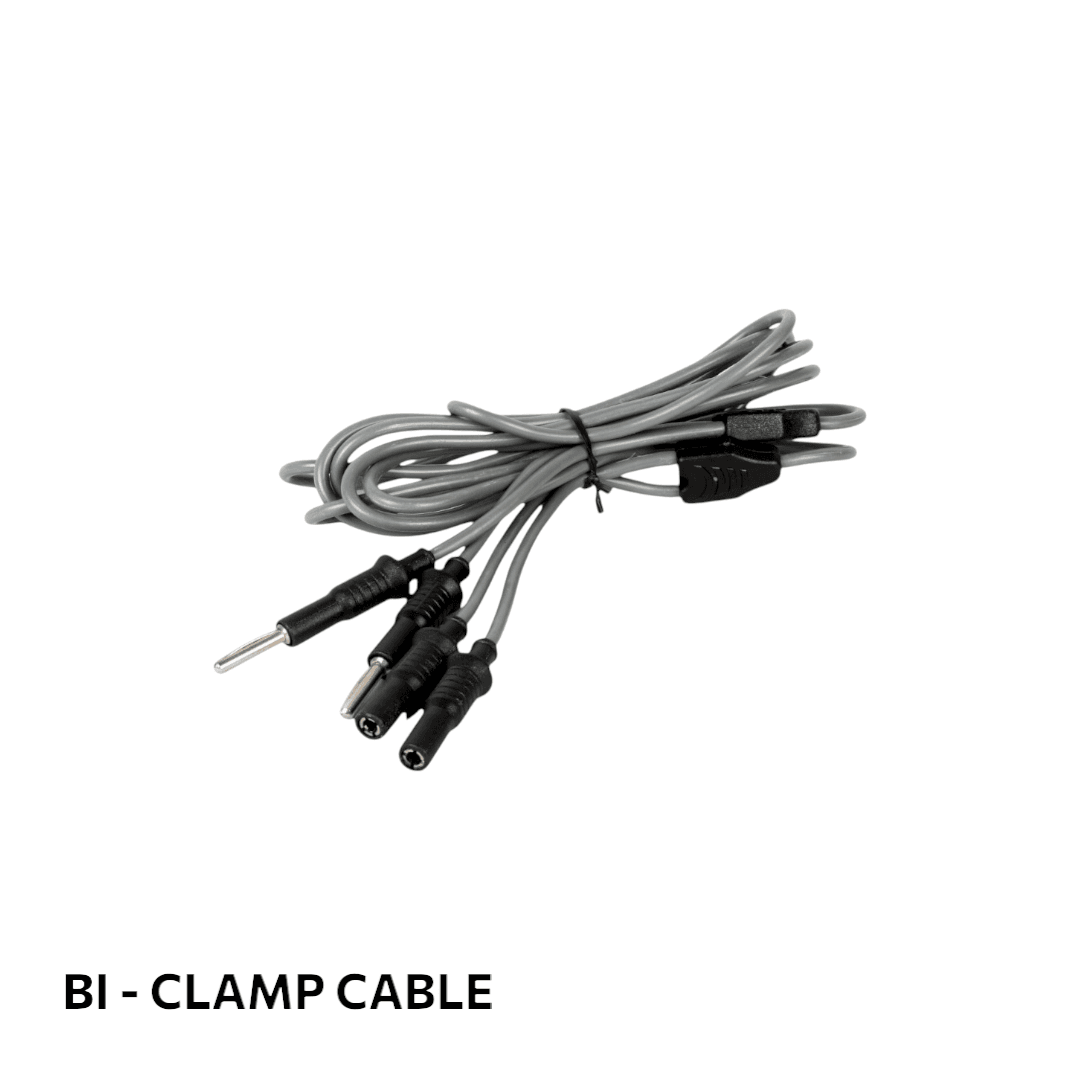
BI-Clamp Cable for Bipolar Vessel Sealing Systems
The BI-Clamp Cable from VOGEL by D.R. Surgicare is a specialized bipolar electrosurgical connection cable designed for use with compatible vessel-sealing generators and surgical instruments.
Featuring an advertised high-temperature silicone-insulated design, reinforced conductors, and positive-locking connectors, the VOGEL BI-Clamp Cable is intended to provide an electrical connection within an appropriately configured vessel-sealing system.
The VOGEL product overview specifies a 2-meter cable length and a 15A peak current rating. Both figures should be confirmed for the supplied model before they are used as guaranteed technical specifications.
For hospitals, operating-room departments, laparoscopic surgery centers, biomedical engineers, and medical equipment distributors searching for BI-Clamp cables, bipolar vessel sealing cables, electrosurgical connecting leads, and surgical vessel sealer accessories, VOGEL offers a dedicated equipment connection option.
BI-Clamp Cable for Bipolar Electrosurgical Energy Transfer
The BI-Clamp Cable serves as an electrical connection between a compatible bipolar vessel-sealing instrument and its designated electrosurgical generator.
In a bipolar vessel-sealing system, high-frequency energy is delivered between electrodes in the surgical instrument's jaws.
The cable transfers electrical energy from the generator to the instrument according to the approved system configuration.
For healthcare buyers seeking bipolar energy-transfer cables, vessel-sealer connecting leads, and electrosurgical instrument accessories, correct electrical compatibility is essential.
The cable does not independently produce the vessel seal, measure tissue conditions, or control the generator's energy output.
BI-Clamp Cable for Vessel Sealing Procedures
The VOGEL BI-Clamp Cable is marketed for advanced vessel-sealing systems.
Suitable vessel-sealing instruments use controlled electrosurgical energy and mechanical compression to create an appropriate tissue effect.
The cable is one component in this larger surgical equipment system.
For hospitals sourcing vessel sealing instrument cables, bipolar tissue fusion accessories, and energy-based surgical connection cables, the complete generator-instrument-cable combination must be approved for the intended use.
The cable's construction alone does not establish vessel-sealing capacity, maximum vessel diameter, or clinical sealing performance.
High-Temperature Silicone Insulation
The BI-Clamp Cable is advertised with high-temperature silicone insulation.
Silicone-based insulating materials are used in selected electrical equipment because suitable formulations can provide flexibility and thermal stability.
For high-frequency surgical accessories, however, the insulation must also meet the applicable electrical requirements of the intended system.
For biomedical engineering teams searching for silicone-insulated bipolar cables, high-temperature surgical leads, and insulated vessel-sealer cables, the actual material grade and electrical ratings should be identified.
The maximum permitted operating temperature and sterilization temperature should be confirmed separately.
BI-Clamp Cable with Reinforced Conductors
The VOGEL BI-Clamp Cable features an advertised extra-thick conductor design.
Conductor size and construction influence the electrical properties of a cable assembly, including its resistance and suitability for designated operating conditions.
D.R. Surgicare's associated catalogue identifies copper as the conductor material of its Laparoscopy Bi Clamp Cable.
For healthcare buyers seeking copper-conductor bipolar cables, reinforced vessel-sealing leads, and surgical generator connection accessories, conductor specifications are important.
The actual conductor cross-section, number of cores, insulation arrangement, and permissible current should be obtained from the manufacturer's datasheet.
Positive-Locking Connector Design
The BI-Clamp Cable is described with positive-locking connectors.
A suitable locking mechanism is intended to help retain a compatible connection at its designated equipment interface.
For hospital buyers searching for locking bipolar connectors, secure vessel-sealer cable fittings, and electrosurgical instrument plugs, the connection mechanism is a useful product-selection feature.
The actual connector geometry must match the generator and surgical instrument.
A positive-locking description does not establish compatibility with every manufacturer's connection system.
2-Meter BI-Clamp Cable for Operating-Room Setup
The VOGEL product overview specifies a 2-meter BI-Clamp Cable.
Cable length is relevant when arranging an electrosurgical generator and its associated vessel-sealing instrument within the operating room.
An appropriate length should accommodate the equipment layout without excessive tension or unnecessary cable loops.
For procurement teams seeking 2m BI-Clamp cables, vessel-sealing generator leads, and laparoscopic bipolar cables, the published length provides a useful reference.
However, D.R. Surgicare also lists a 1-meter configuration. The supplied cable length must be verified before ordering.
BI-Clamp Cable and 15A Peak Current Rating
The VOGEL BI-Clamp Cable is advertised with a 15A peak current rating.
This is a claimed electrical specification that requires product-level verification.
Peak current describes a different electrical condition from continuous current and should not be substituted for a continuous-duty rating.
For buyers searching for high-current bipolar cables, 15A peak vessel-sealing leads, and high-frequency surgical connection cables, the relevant test method and operating conditions should be requested.
Electrical suitability also depends on the generator waveform, accessory voltage, duty cycle, insulation, connectors, and full equipment system.
High-Frequency Surgical Cable Construction
A BI-Clamp Cable intended for electrosurgery must be suitable for high-frequency electrical operation.
The complete cable assembly includes conductors, insulating material, connector contacts, cable ends, and strain-relief features.
Each component influences the overall electrical and mechanical performance.
For hospitals sourcing high-frequency electrosurgical cables, HF vessel-sealing leads, and bipolar generator accessories, the complete assembly should be evaluated using relevant manufacturer data.
Cable appearance or thickness is not sufficient to establish an electrical safety rating.
BI-Clamp Cable for Laparoscopic Vessel Sealing
The VOGEL BI-Clamp Cable may be relevant to compatible laparoscopic bipolar vessel-sealing instruments.
Laparoscopic vessel sealers are used during selected minimally invasive procedures requiring controlled tissue sealing.
The cable must be matched to the instrument handle, connector arrangement, generator output, and approved operating configuration.
For buyers searching for laparoscopic vessel sealer cables, BI-Clamp laparoscopic accessories, and minimally invasive surgical energy leads, instrument-specific compatibility is essential.
The same cable should not be assumed compatible with every laparoscopic bipolar forceps design.
BI-Clamp Cable for Open Surgical Applications
The BI-Clamp Cable may also be considered for suitable open surgical vessel-sealing instruments.
Open surgical procedures can use bipolar energy-based instruments with a variety of jaw designs and cable connections.
The required electrical connection depends on the actual instrument and generator.
For hospitals sourcing open surgery vessel-sealing cables, bipolar surgical clamp accessories, and electrosurgical generator leads, selecting the correct interface is necessary.
A cable approved for one instrument family should not automatically be substituted for another.
BI-Clamp Cable for General Surgery
The VOGEL BI-Clamp Cable is relevant to suitable general surgical equipment systems using compatible bipolar vessel-sealing instruments.
These systems may be used during selected procedures involving tissue dissection, vessel sealing, and coagulation.
The cable provides the appropriate connection only when specified for the complete surgical system.
For operating-room buyers seeking general surgery bipolar cables, vessel-sealing equipment connectors, and electrosurgical accessories, the manufacturer-approved equipment combination should guide purchasing.
BI-Clamp Cable for Gynecological Surgery
The BI-Clamp Cable may also be considered for compatible bipolar vessel-sealing instruments used in selected gynecological procedures.
Different surgical systems have different generators, instruments, connectors, and permitted energy modes.
For healthcare buyers searching for gynecology vessel-sealing cables, bipolar hysterectomy equipment accessories, and laparoscopic sealing instrument leads, compatibility should be verified for the exact system.
The cable itself does not establish a clinical indication for any particular gynecological procedure.
BI-Clamp Cable for Urology and Other Specialties
Where approved vessel-sealing equipment is used, the BI-Clamp Cable may be relevant to other surgical departments, including suitable urological procedures.
Equipment requirements must be based on the generator and instrument specifications rather than the surgical specialty alone.
For hospitals sourcing urology bipolar cables, electrosurgical vessel-sealing accessories, and compatible surgical energy leads, correct model identification is important.
BI-Clamp Cable vs Standard Bipolar Cable
VOGEL lists a separate Standard Bipolar Cable alongside its BI-Clamp Cable.
The standard cable is marketed for compatible bipolar electrosurgical instruments, with a published 2.5-meter length.
The BI-Clamp Cable is specifically promoted for compatible vessel-sealing systems and has different published construction and electrical claims.
For procurement teams comparing standard bipolar cables, high-current vessel-sealer cables, and surgical forceps connecting leads, these products should remain distinct.
A standard bipolar cable is not automatically suitable for an advanced vessel-sealing generator.
BI-Clamp Cable vs LNT Type Bipolar Cable
The Bipolar Cable LNT Type is another separately listed VOGEL accessory.
Its product overview emphasizes LNT-type generator compatibility, a shielded cable design, and flexible handling.
The BI-Clamp Cable is instead marketed for vessel-sealing equipment.
For hospitals searching for LNT bipolar cables, BI-Clamp connecting leads, and electrosurgical generator accessories, the correct selection depends on the specific generator and surgical instrument.
These products should not be treated as interchangeable without documented compatibility.
BI-Clamp Cable vs BOWA Type Bipolar Cable
VOGEL also offers a Bipolar Cable BOWA Type.
This is a separately marketed cable for compatible BOWA electrosurgical connections.
A BI-Clamp-style vessel-sealing cable may use a different connection arrangement and may be subject to different electrical requirements.
For medical equipment buyers comparing BOWA bipolar cables, BI-Clamp cables, and bipolar vessel-sealer leads, equipment-specific technical information is essential.
Do not infer compatibility from the fact that both cables serve bipolar electrosurgery.
BI-Clamp Cable vs TURP Bipolar Cable
The TURP Bipolar Cable is designed for compatible transurethral resection equipment.
The BI-Clamp Cable is marketed for suitable vessel-sealing instruments.
Both are high-frequency electrical accessories, but their intended equipment and connector configurations may be different.
For institutional buyers sourcing TURP bipolar cables, resectoscope connections, and vessel-sealing cables, the clinical equipment configuration must be identified before choosing a replacement.
BI-Clamp Cable vs Monopolar Cable
A BI-Clamp Cable and a Monopolar Cable belong to different electrosurgical circuit configurations.
A BI-Clamp vessel-sealing cable connects compatible bipolar sealing equipment.
A Monopolar Cable connects suitable active monopolar instruments to their designated generator output.
For surgical procurement teams comparing bipolar vessel-sealing accessories and monopolar electrosurgical cables, electrical system identification is essential.
The two types should not be substituted for one another.
Vessel Sealing System Compatibility
The VOGEL BI-Clamp Cable is advertised as compatible with major vessel sealers.
However, vessel-sealing generators and instruments may use different connector designs, energy-control systems, identification features, and approved accessory combinations.
Some equipment uses manufacturer-specific electrical or instrument-recognition interfaces.
For hospitals seeking compatible BI-Clamp cables, replacement vessel-sealer leads, and generator-specific electrosurgical accessories, the exact generator and instrument model numbers should be checked before purchase.
No universal compatibility claim should be made without an approved compatibility list.
Reusable BI-Clamp Cable and Instrument Maintenance
D.R. Surgicare's related product catalogue identifies its Laparoscopy Bi Clamp Cable as reusable.
If the supplied VOGEL model is reusable, its cleaning, inspection, and reprocessing requirements must be documented.
Important inspection areas include the cable insulation, connector contacts, strain-relief sections, and any visible mechanical damage.
For CSSD departments and biomedical teams purchasing reusable BI-Clamp cables, sterilizable electrosurgical leads, and vessel-sealer maintenance accessories, validated processing instructions are essential.
BI-Clamp Cable and Sterilization Requirements
The VOGEL BI-Clamp Cable is described with high-temperature silicone insulation.
However, silicone insulation alone does not prove that the complete cable assembly can withstand a particular sterilization cycle.
Reprocessing suitability depends on the conductors, insulation, contacts, connector housings, seals, and finished assembly.
For hospitals sourcing autoclavable vessel-sealer cables, reusable bipolar connecting leads, and CSSD-compatible electrosurgical accessories, the manufacturer should provide the exact validated sterilization method.
Do not assume that a generic website claim about autoclavable instruments applies to this cable.
BI-Clamp Cable Inspection Before Use
The BI-Clamp Cable should be inspected according to the manufacturer's instructions before connection to a generator.
Cable assemblies with damaged insulation, exposed conductors, loose contacts, impaired locking features, or other defects should not be used.
For biomedical engineering departments responsible for vessel-sealer cable inspection, electrosurgical accessory maintenance, and generator connection checks, cable integrity is an important equipment-safety consideration.
The operating-room team should follow the specific generator and instrument instructions.
Selecting the Correct BI-Clamp Cable
Before purchasing a BI-Clamp Cable, healthcare procurement teams should identify the exact generator, vessel-sealing instrument, and required cable connection.
Important details include generator-side plug, instrument-side connector, cable length, conductor material, electrical rating, insulation type, locking mechanism, reuse classification, and reprocessing instructions.
For distributors and hospitals sourcing BI-Clamp cable replacements, bipolar vessel-sealing accessories, and high-frequency electrosurgical leads, complete model-specific documentation supports accurate ordering.
VOGEL BI-Clamp Cable Supplier in India
VOGEL by D.R. Surgicare supplies medical and surgical accessories for hospitals, laparoscopic surgery centers, operating rooms, biomedical engineering departments, distributors, and institutional procurement teams.
The VOGEL BI-Clamp Cable is listed alongside Standard Bipolar Cables, BOWA Type and LNT Type Bipolar Cables, TURP Bipolar Cables, and other electrosurgical equipment accessories.
For buyers searching for BI-Clamp Cable suppliers in India, vessel-sealing cable manufacturers, laparoscopic bipolar cable distributors, and surgical generator connecting leads, VOGEL provides product information and institutional purchasing support.
Explore Related VOGEL Electrosurgery Accessories
Browse the VOGEL Medical Accessories collection for BI-Clamp cables, bipolar cables, and other surgical equipment accessories.
Compare the VOGEL Standard Bipolar Cable for a separately listed bipolar electrosurgical connection option.
Explore the VOGEL Bipolar Cable LNT Type for suitable LNT-type generator connections.
View the VOGEL Bipolar Cable BOWA Type for a separate generator-specific bipolar cable.
Compare the VOGEL TURP Bipolar Cable for resectoscope-related bipolar energy connections.
Browse VOGEL's Laparoscopy Instrument Range for bipolar forceps and other minimally invasive surgical equipment.
Read VOGEL's article on common mistakes in surgical instrument selection for equipment procurement guidance.
Request a quotation from VOGEL for the BI-Clamp Cable, confirmed length, connector configuration, electrical ratings, compatible vessel-sealing equipment, and institutional purchasing requirements.
Connect with VOGEL by D.R. Surgicare on LinkedIn for company information and medical equipment updates.
Package contents for BI-Clamp Cable: 3 Premium Connection Features have not been specified. Please confirm the supplied items and accessories before ordering.
For shipping, returns and applicable conditions, please read our Returns & Refunds Policy.
Are these instruments autoclavable?
Yes. Every VOGEL instrument is fully autoclavable and built for repeated sterilization cycles.
Do you supply in bulk to hospitals and distributors?
Yes. Institutional and distributor pricing is available — contact our sales team with your requirement list.
Is a GST invoice provided?
A GST-compliant invoice is issued with every order.
Related products
 SALESAVE 4%Accessories
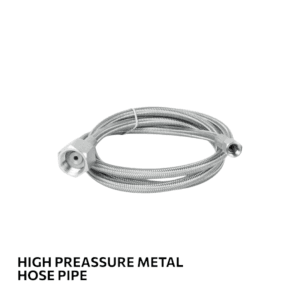
High Pressure Metal Hose Pipe: 3 Premium Design Features
Original price was: ₹13,000.₹12,500Current price is: ₹12,500.Save₹500- SALESAVE 56%Accessories
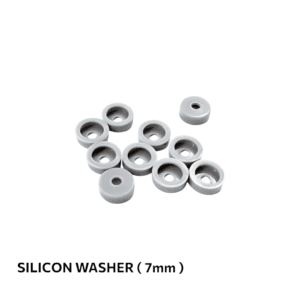
Laparoscopy Silicon Washer(Pack of 5): 4 Premium Trocar Seal Sizes
Original price was: ₹500.₹220Current price is: ₹220.Save₹280 - SALESAVE 23%Accessories
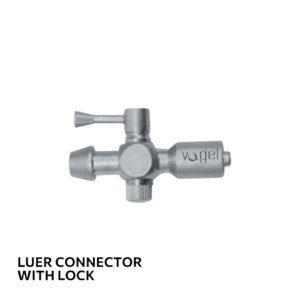
Luer Connector With Lock: 2 Premium Size Options
Original price was: ₹975.₹750Current price is: ₹750.Save₹225