

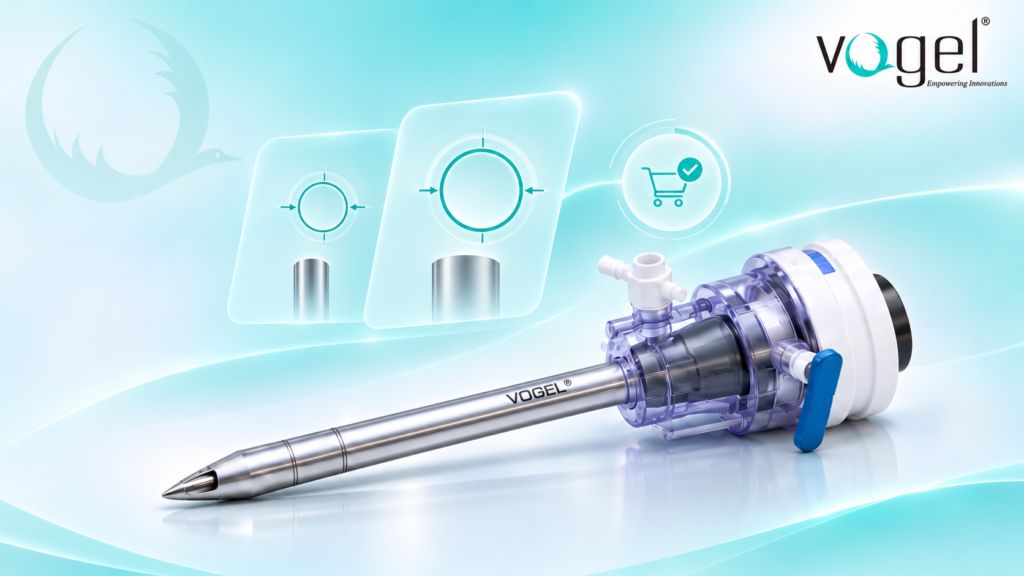
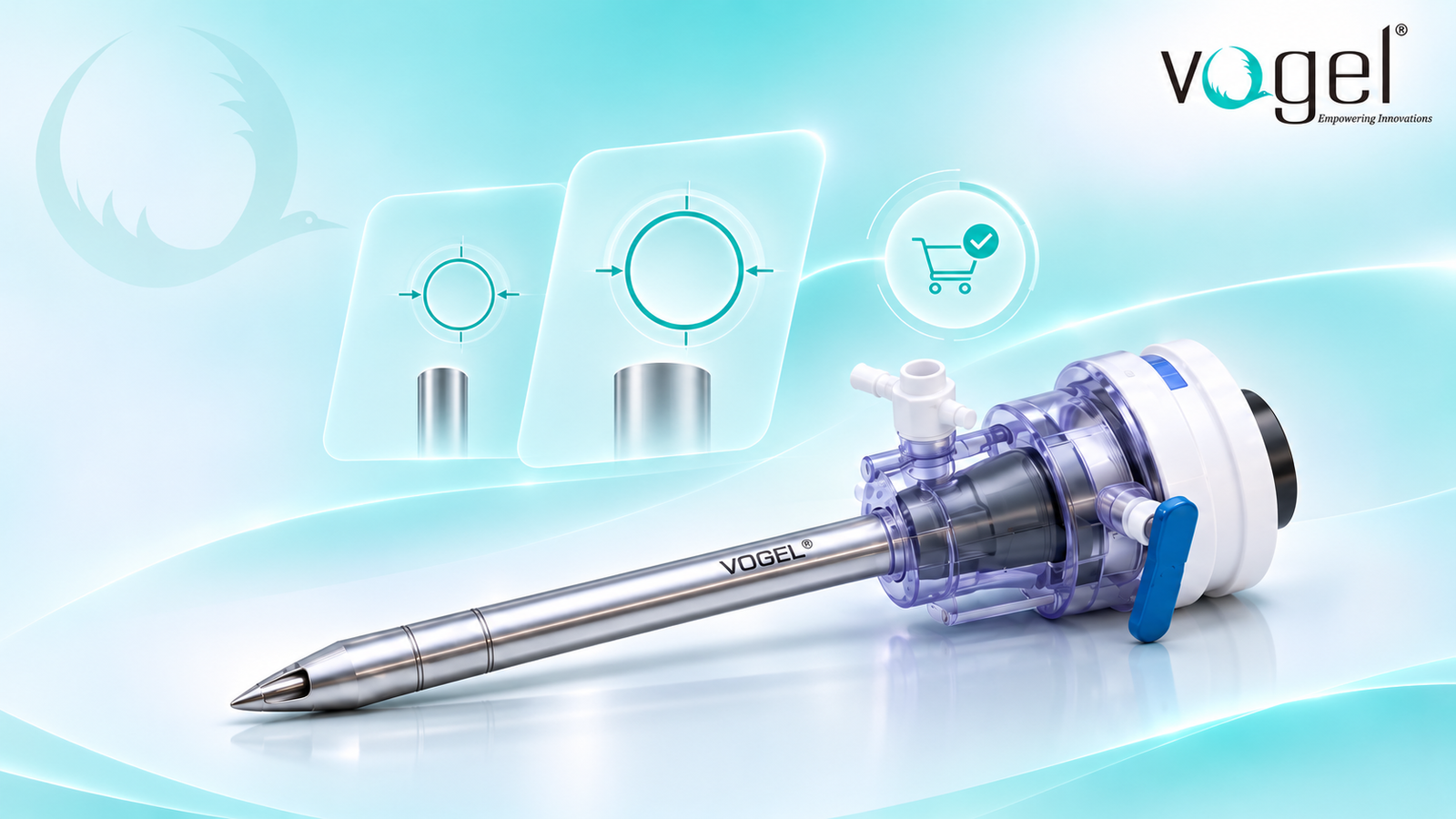
Nominal 5 mm and 10 mm labels do not establish interchangeability. Identify the exact intended devices and obtain documented manufacturer compatibility.
Official VOGEL product photographs
These are unaltered product photographs from the VOGEL website. They illustrate different instrument patterns, not their clinical suitability, compatibility or dimensions. Refer to the exact device documentation before purchase or reuse.
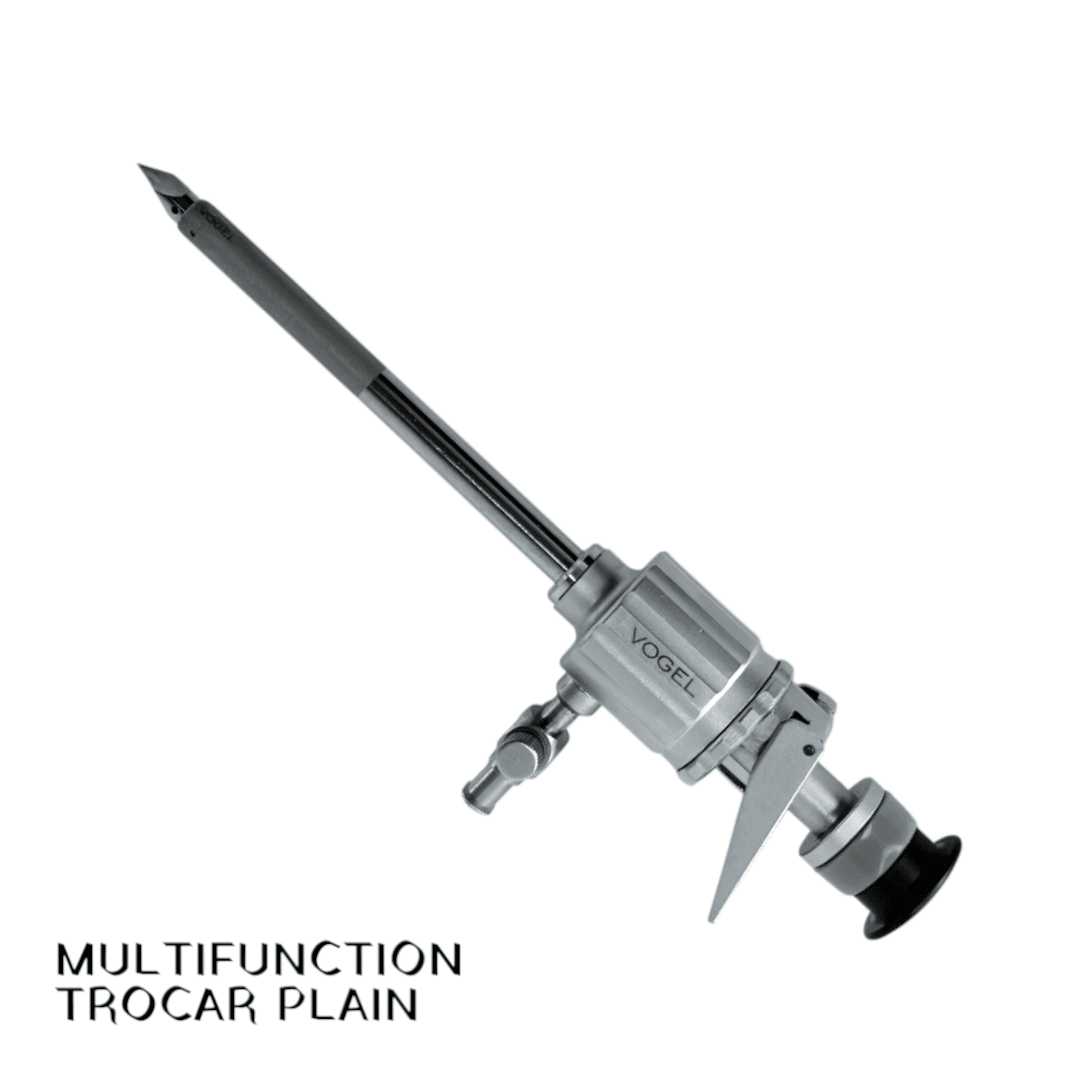
VOGEL Plain-Shaft Trocar
Original VOGEL plain-shaft trocar; image does not indicate diameter.
Explore VOGEL instrument information ↗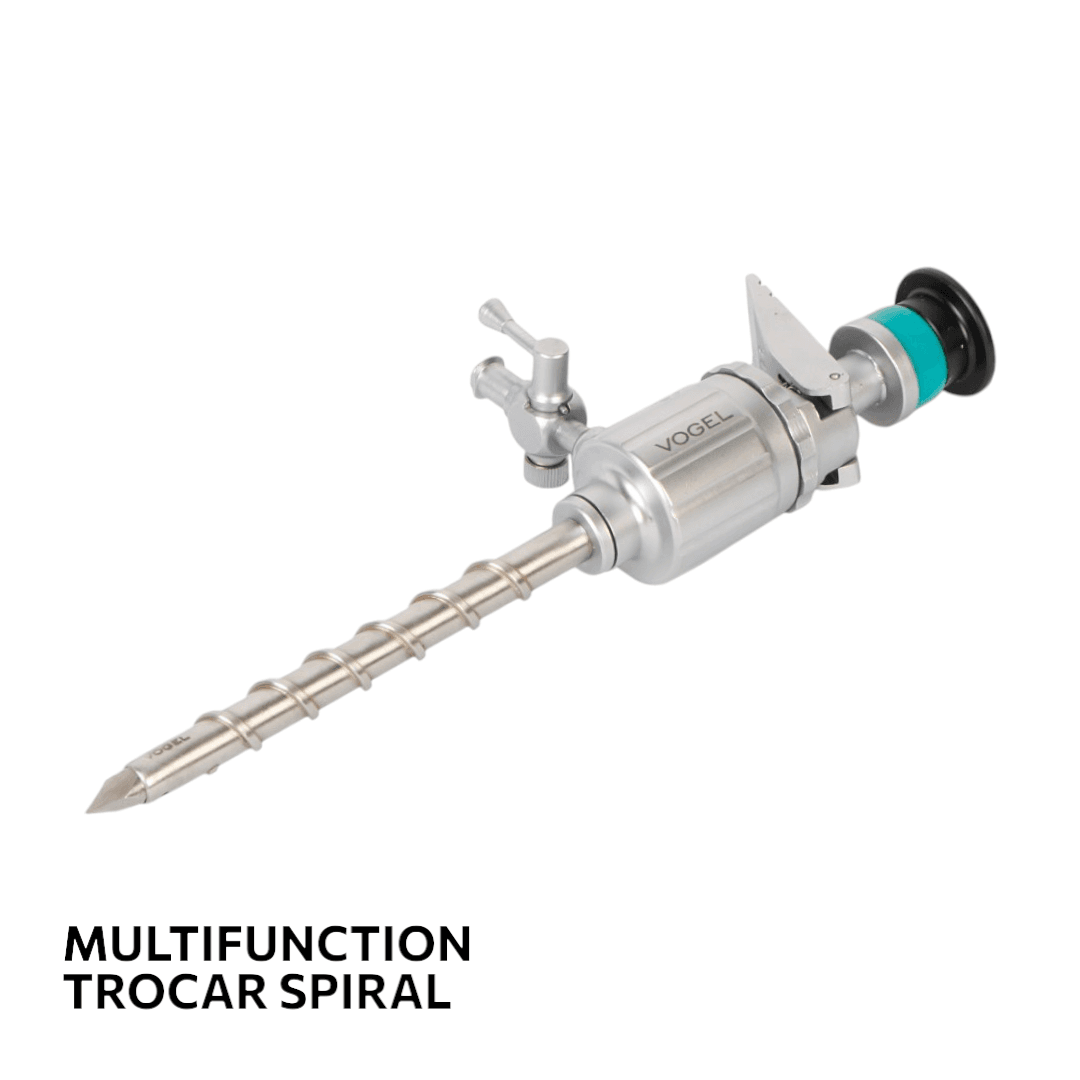
VOGEL Spiral-Shaft Trocar
Original VOGEL spiral-shaft trocar; image does not indicate diameter.
Explore VOGEL instrument information ↗A trocar purchase looks straightforward until a hospital has to match the port with its existing instruments, procedure mix, surgeon preferences and reprocessing workflow. Choosing between a 5mm and 10mm laparoscopic trocar is not simply a question of which diameter is more popular. It is a question of what the surgical team intends to pass through the access device—and whether the entire system works together as intended.
This guide is written for hospital procurement teams, OT managers and surgical distributors comparing reusable laparoscopic access products. Clinical port placement and technique must always remain the responsibility of appropriately trained surgical professionals.
What does “5mm” or “10mm” mean on a trocar specification?
These labels indicate nominal access-size categories, not a guarantee that every instrument or accessory with the same number will be compatible. The trocar, its cannula, seals, valves and the instrument being introduced form a system. Actual fit can depend on external dimensions, design tolerances, seals and accessories.
A purchasing team should therefore ask for the device’s stated compatibility, not infer it from two similar-sounding sizes. If your hospital uses products from different suppliers, compatibility should be checked for the specific pairing.
5mm vs 10mm trocar: practical buyer comparison
| Question | 5mm trocar | 10mm trocar |
|---|---|---|
| Typical procurement purpose | Access for appropriately sized smaller instruments | Access for compatible larger instruments or components |
| What to match | Shaft diameter, length, connector and seal behavior | Shaft diameter, length, connector and seal behavior |
| Why size alone is insufficient | Working dimensions and seals vary | Working dimensions and seals vary |
| Clinical selection | Determined by the surgical team and intended procedure | Determined by the surgical team and intended procedure |
| Reprocessing review | IFU, valve and seal access, cleaning and inspection | IFU, valve and seal access, cleaning and inspection |
Important: This is a procurement comparison, not a recommendation for surgical technique, port placement or wound management. Those decisions require clinical assessment and applicable institutional protocols.
Three questions to settle before asking for a quote
1. What exactly needs to pass through the port?
Instead of ordering by diameter alone, list the laparoscopic hand instruments, optics or other components the team intends to use. Record their manufacturer and model where possible. Ask the supplier to confirm the specific compatibility and any required adapters or seals.
2. Which configuration does the surgeon and facility use?
The purchase request may need to distinguish tip style, cannula design, length, valve arrangement and preferred fixation configuration. Even within one diameter, different models can behave differently. A product name such as “5mm reusable trocar” is not sufficiently specific for a reliable repeat order.
3. Can the sterile processing team reprocess it as labeled?
Reusable access systems can include seals, valves and narrow internal surfaces that need attention during cleaning and inspection. Ask for the applicable manufacturer’s instructions for use, disassembly information where relevant, permitted cleaning agents and validated sterilization process. The FDA’s reusable-device overview explains why following the supplied reprocessing instructions matters.
VOGEL’s multifunction trocar: what the live listing says
The VOGEL Laparoscopy Multifunction Trocar is described on the company’s live product page with 5mm, 7mm and 10mm choices. The listing also describes Plain and Spiral shaft configurations, Blunt and Sharp tip choices, and a dual-mode valve arrangement.
That variety is useful when preparing a specification request, but do not assume that every advertised option is available in every combination. Request the exact SKU, latest datasheet, compatible accessories and current availability before finalizing a purchase order. The product page is a starting point for a quotation—not a substitute for the item’s labeling and IFU.
Don’t ignore valve and seal performance
A trocar’s sealing arrangement matters when instruments are introduced or withdrawn. For purchasers, the right questions are practical: Which instrument sizes does the seal support? What are the inspection criteria? Are replacement components provided or available separately? Does the manufacturer’s documentation specify assembly, disassembly or maintenance requirements?
A product may advertise a valve mechanism, but gas-sealing performance depends on configuration, correct assembly and use within the labeled limits. Ask for documentation rather than infer performance from a marketing phrase.
Plain vs Spiral, Blunt vs Sharp: another layer of choice
Some trocar ranges distinguish smooth or spiral cannula features and blunt or sharp tips. These are design options, not interchangeable performance guarantees. The clinical team should determine which configuration is appropriate; the procurement team should capture that decision accurately in the RFQ. If a surgeon requests a specific configuration, record it as a requirement rather than leaving the supplier to interpret it.
A 10-point trocar RFQ checklist
Before sending your quote request, write down:
- Required nominal access diameter and number of units.
- Required working length and configuration, if specified by the surgeon.
- Labeled instrument and accessory compatibility.
- Tip design and cannula style requested.
- Valve and seal arrangement.
- Reusable or single-use status, with corresponding documentation.
- Cleaning, disassembly and reprocessing instructions for the exact item.
- Replacement seal/component availability and service contact.
- Labeling, identification and lot/serial traceability as applicable.
- Commercial quotation, packaging, lead time and return terms.
For an order covering multiple operating rooms, include a quantity sheet by diameter and procedure-specific configuration. That prevents an apparently complete order from arriving with the wrong mix of sizes.
What about 7mm trocar options?
Not every hospital’s requirement falls neatly into a 5mm-versus-10mm comparison. VOGEL also advertises a 7mm choice within its multifunction trocar range. Whether that size is useful depends on the actual compatible instruments and clinical requirements. It should only be included after confirming availability and device-specific fit.
Final buying advice
Do not ask “Which trocar is best?” without specifying the instruments and workflow. Ask: “Which trocar configuration is compatible with this exact intended use, and what supporting documentation confirms it?” That question produces better quotations and fewer procurement surprises.
Explore the VOGEL Multifunction Trocar and the wider laparoscopy instrument range. For a hospital or distributor order, request a size-wise, configuration-wise quotation and have the surgeon and sterile processing team review the proposed items before purchase.
What a “same-size” listing does not prove
Nominal diameter alone does not establish compatibility. Obtain written confirmation for the relevant cannula internal dimensions, access components, seal and valve arrangement, instrument outer dimensions and any model-specific limitations. Product descriptions may present a family of sizes or options; the supplier must confirm the exact purchasable combination and current documentation for the chosen SKU.
Reprocessing is product-specific: The fact that a trocar family is advertised as reusable does not authorize a generic cleaning or sterilization cycle. Use the exact manufacturer’s validated IFU and the healthcare facility’s approved process; involve trained sterile-processing personnel before procurement approval.
For a verified product-specific quotation, review the VOGEL multifunction trocar listing and contact VOGEL with the desired configuration, clinical requirements, size and quantity. Request the latest specification and IFU before purchasing.
Sources and technical references
Product links in this article refer exclusively to VOGEL. External professional references provide general principles and do not certify the suitability of any VOGEL model.
Frequently asked questions
Is a 10mm trocar automatically better than a 5mm trocar?
No. The appropriate nominal size depends on the intended procedure, compatible instruments, clinical decision and specific device labeling. Larger is not universally better.
Can I put any 5mm laparoscopic instrument through any 5mm trocar?
Do not assume so. Confirm the manufacturer-stated compatibility for the exact models, including cannula and seal design.
Does VOGEL offer a 7mm laparoscopic trocar?
Its multifunction trocar product page describes 5mm, 7mm and 10mm options. Confirm the desired combination and current supply terms directly when ordering.
What documents matter when buying reusable trocars?
Request the exact product specification, IFU, reprocessing information, service and replacement-part details, and applicable quality/regulatory documentation.