



Hospitals should evaluate candidate suppliers against written, clinically approved requirements, not just price or marketing claims.
Official VOGEL product photographs
These are unaltered product photographs from the VOGEL website. They illustrate different instrument patterns, not their clinical suitability, compatibility or dimensions. Refer to the exact device documentation before purchase or reuse.

VOGEL Fenestrated Grasper
Original VOGEL grasper photograph; not a clinical suitability recommendation.
Explore VOGEL instrument information ↗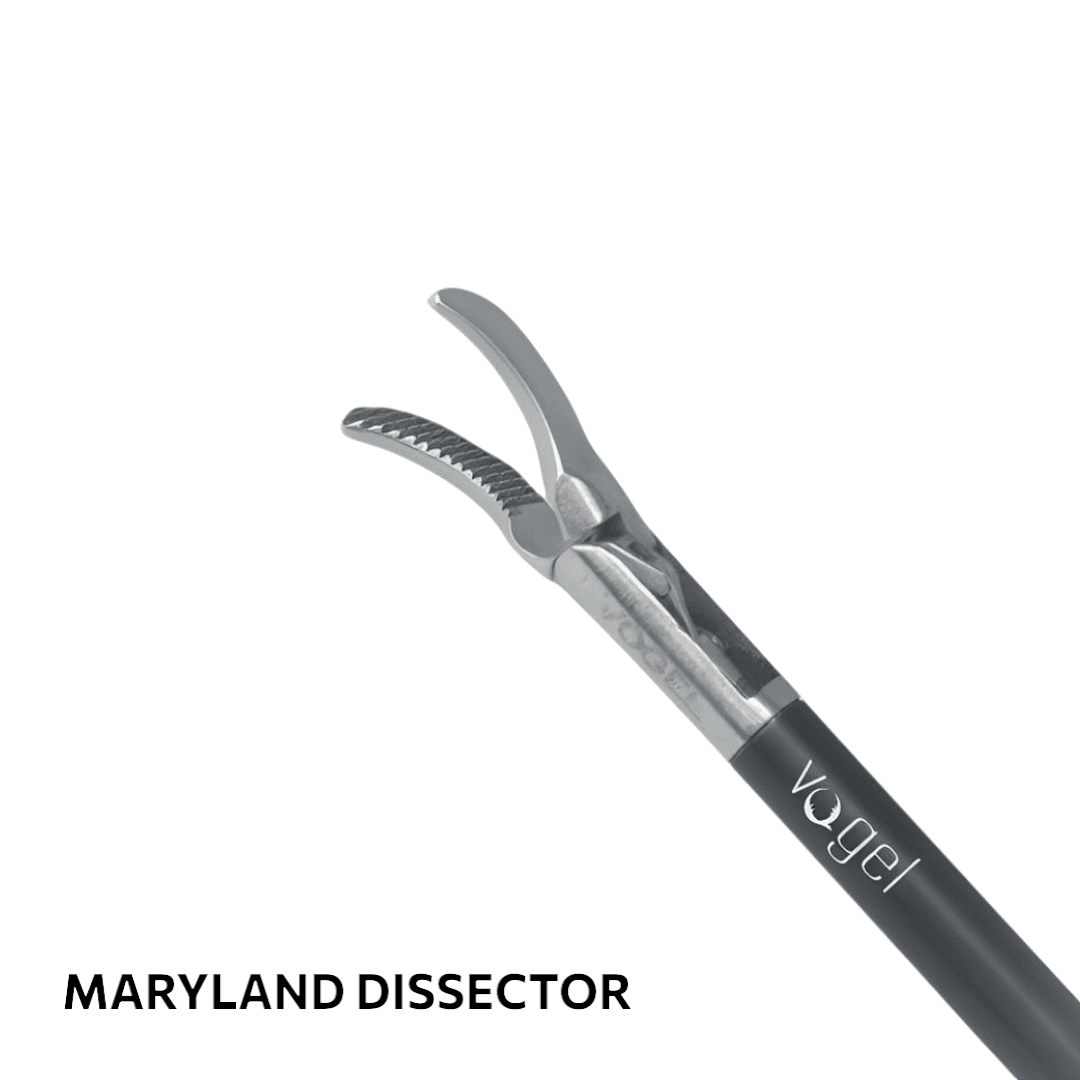
VOGEL Maryland Dissector
Original VOGEL dissector photograph; verify the exact item documentation.
Explore VOGEL instrument information ↗Hospitals rarely buy laparoscopic instruments as isolated objects. A purchase decision often affects surgeons, OT nurses, sterile processing teams, biomedical engineering, inventory managers and the finance department. A good supplier must answer questions from all of them—not just quote a price.
For buyers comparing laparoscopic instrument suppliers in India, the most useful starting point is a clear specification sheet, a documented evaluation process and a plan for after-sales support. Whether you need a few replacement graspers or a complete surgical instrument set, the questions below can make supplier comparisons easier and more defensible.
Start with your own requirements, not a supplier catalogue
A catalogue can show you what is available; it cannot decide what your team needs. Before sending enquiries, ask the clinical team to distinguish between must-have, preferred and optional attributes. For example, “laparoscopic grasper” is too broad to support an accurate quote. The buyer may need to specify jaw pattern, shaft diameter, usable length, handle/ratchet preference, reusable status and intended compatibility.
Build one request-for-quotation (RFQ) line for each instrument. If an item is intended to be used with an existing trocar, handle, energy platform or reprocessing system, record that dependency. Ask suppliers to flag any exceptions rather than assume products are interchangeable.
Manufacturer, distributor or service partner: does the difference matter?
A manufacturer may offer design choices or direct technical clarification. A distributor may offer faster access to multiple product ranges, combined ordering or regional service. Neither business model guarantees better instruments by itself. The right partner is the one that can demonstrate technical fit, dependable fulfillment and accountable support for your purchase.
If customization is important, ask who will approve drawings, define inspection criteria, document changes and support a later repeat order. VOGEL by D.R.Surgicare describes its business as manufacturing, supply, export and services, and maintains a customization service page. Those are useful capabilities to discuss, but a buyer should still verify the scope and feasibility for the exact product being ordered.
A seven-part supplier evaluation checklist
1. Product fit and clear specifications
Request a written product specification—not just an image and a one-line name. For relevant instruments, this may include the shaft diameter, working length, jaw geometry, handle style, parts configuration and intended use. Where an electric surgical interface is involved, verify the specific system and compatibility requirements in the labeling and instructions.
2. Product identity, documentation and traceability
Ask how a delivered instrument can be traced to its SKU, batch or serial number, where applicable. Request relevant manuals, inspection documentation and certifications that can be verified. Do not assume every product in a supplier’s catalogue carries the same certification or regulatory clearance.
3. Cleaning, inspection and sterilization instructions
Before buying reusable instruments, involve your sterile processing team. Can the facility implement the manufacturer’s instructions for use (IFU)? What are the disassembly steps, permitted cleaning methods, compatibility limits and validated reprocessing instructions? The FDA explains why device-specific reprocessing is central to safe reuse. A product that is hard to reprocess in your facility can become an operational burden even if its purchase price is attractive.
4. Samples and acceptance criteria
For higher-value or unfamiliar patterns, consider a controlled sample evaluation under institutional policy. Document ergonomic preferences, appearance, articulation, jaw alignment, connection fit and the checks appropriate to the device. Avoid unverified claims about performance based only on catalogue photographs. Record who evaluated the sample and which criteria were met.
5. Delivery and repeat-order consistency
Check lead time, order confirmation, packaging, availability of spare parts, return/replacement terms and the supplier’s method for communicating changes. For international orders, clarify the importing country’s documentation needs and who is responsible for customs, freight and local regulatory requirements.
6. Repair, replacement and after-sales service
An instrument will eventually need inspection, adjustment, servicing or replacement. Ask whether the supplier can assess a defect, how warranty claims are handled, and what happens when a part is no longer available. Get response expectations in writing where possible.
7. Commercial terms and total cost
The cheapest unit price is not always the lowest total cost. Consider usable life, accessories, inspection workload, repair process, lead time, downtime risks and the cost of keeping compatible backup instruments. Compare like-for-like specifications, quantities and commercial terms.
An illustrative supplier scorecard
This sample weighting can be adapted to your procurement policy. It is a decision aid, not an industry standard, and mandatory safety or regulatory requirements should remain pass/fail gates.
| Evaluation area | Illustrative weighting | Evidence to request |
|---|---|---|
| Technical specification and compatibility | 25% | SKU-specific datasheet and configuration |
| Quality documentation and traceability | 25% | Relevant verifiable documents and identification method |
| Reprocessing support | 15% | Applicable device IFU and maintenance instructions |
| After-sales and service | 15% | Warranty, repair and escalation process |
| Delivery reliability | 10% | Lead time, packing and order confirmation |
| Commercial value | 10% | Itemized, comparable quotation |
Example: A supplier with a competitive quotation but no usable reprocessing instructions should not win because of price points. Resolve the missing information first.
What to include in your RFQ email
A useful RFQ identifies the hospital or buyer, clinical department, item description, quantity, required diameter and working length, preferred jaw/handle configuration, expected standards or documentation, sample requirement, location, delivery date and the deadline for clarification. Include a line asking suppliers to list all deviations from the requested specification.
For a complete set, group the list by access, cutting, grasping, dissecting, suturing, energy, suction/irrigation and supporting accessories. It will make it easier to identify duplicates and missing items before issuing the purchase order.
Where VOGEL fits in a sourcing shortlist
VOGEL’s laparoscopy catalogue lists trocars, scissors, dissectors, graspers, forceps, needle holders and other minimally invasive instrument categories. The company’s About page describes a manufacturing and supplier model, while its customization page explains the enquiry-to-design process. These pages can serve as the starting point for a product-specific discussion; request current specifications, documentary evidence, commercial terms and suitability confirmation for your exact order.
A purchase decision worth documenting
A strong supplier evaluation ends with a short record: which product was chosen, why it fits the intended workflow, what evidence was reviewed, what remains conditional and who approved the decision. That document is valuable when your hospital reorders, trains new staff or investigates a service issue months later.
If you are preparing a new laparoscopic instruments list or comparing replacement items, start with a review of VOGEL’s laparoscopy range and request a SKU-wise quotation with specifications rather than a generic bundled price.
Questions that should stop a purchase until clarified
A buying team should not approve a reusable instrument simply because a seller states that it is “medical grade,” “compatible,” “autoclavable” or “internationally certified.” Ask for the documents supporting claims relevant to the exact model. In particular, verify intended use, dimensional compatibility, reusable versus single-use labeling, validated reprocessing instructions and the suitability of required accessories. If essential evidence is missing, pause the decision and seek written clarification.
For exports, the destination country’s import and medical-device requirements require separate assessment; supplier marketing language alone does not demonstrate regulatory authorization for a specific market.
VOGEL enquiry: Review VOGEL’s laparoscopy catalogue, discuss documented customization requirements where applicable, and send your SKU-wise request for quotation to VOGEL. Product selection remains subject to clinical and purchasing approval.
Sources and technical references
Product links in this article refer exclusively to VOGEL. External professional references provide general principles and do not certify the suitability of any VOGEL model.
- VOGEL – About
- VOGEL – Laparoscopy portfolio
- VOGEL – Customization
- FDA – Reprocessing of reusable medical devices
Frequently asked questions
How do hospitals compare surgical instrument suppliers fairly?
Use the same item-by-item specification sheet and ask each supplier to disclose deviations, documentation, service arrangements and delivered cost. Evaluate mandatory safety and compatibility requirements before comparing price.
Is buying directly from a manufacturer always better?
Not necessarily. A manufacturer may help with customization and technical clarification, while a distributor may offer other procurement benefits. Verify the actual services, documentation and accountability of either supplier.
Which documents should buyers request for reusable laparoscopic instruments?
Ask for the device-specific IFU, applicable technical specifications, product identification and traceability details, and regulatory or quality documentation relevant to the product and destination market. The required evidence varies by device and jurisdiction.
Can a surgical instrument manufacturer customize laparoscopic sets?
Some manufacturers offer customized configurations. Confirm feasibility, approved drawings, compatibility, inspection criteria, production terms and documentation before ordering.