


A procurement-first framework that turns jaw-pattern names into a clearly specified request for quotation.
Explore the 7 buying checks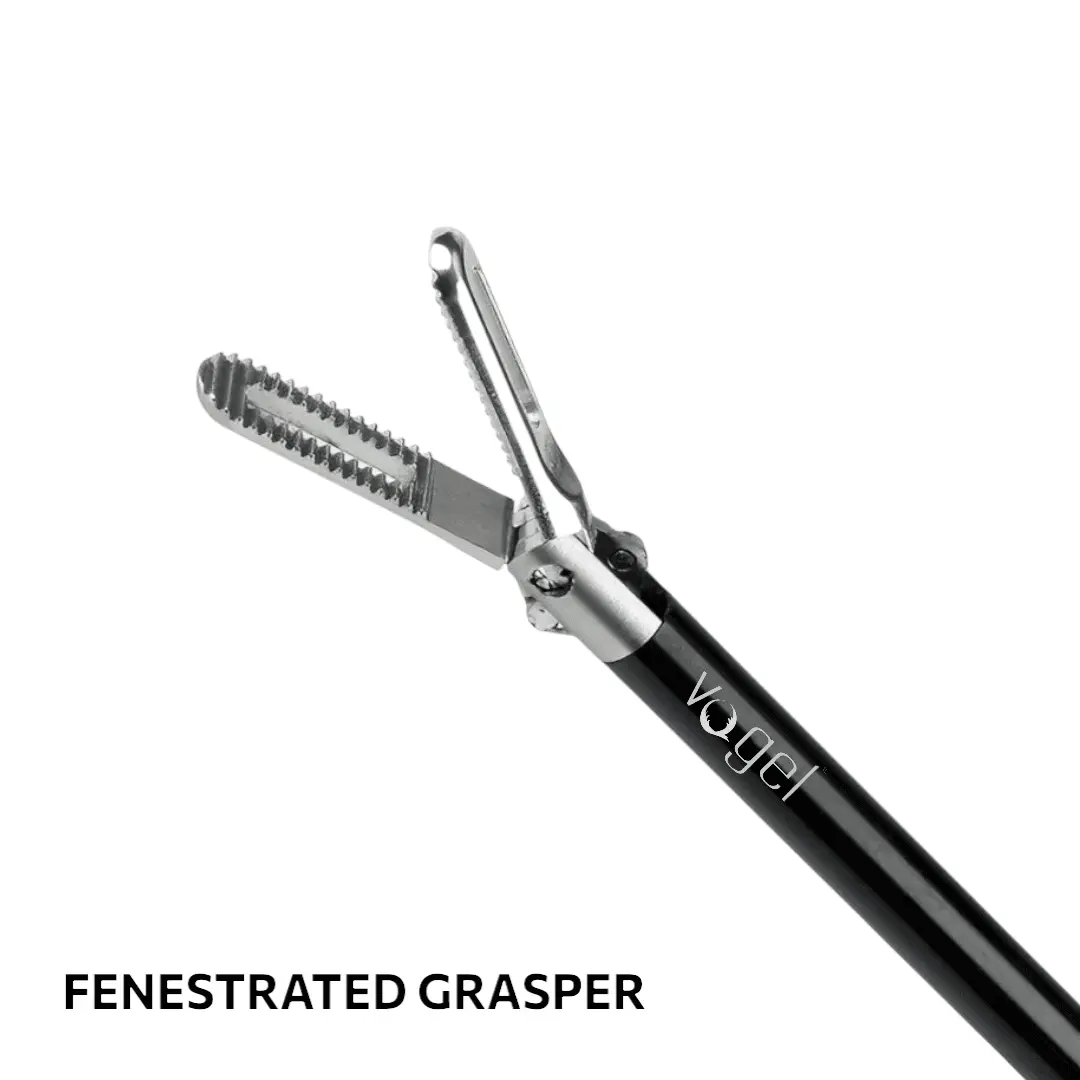
A laparoscopic grasper buying guide should help a procurement team define the required device, not guess which jaw pattern a surgeon needs. Hospitals often receive requests written as “one 5 mm grasper” or “a fenestrated instrument.” Those descriptions are useful starting points, but they omit the exact intended task, working-end configuration, dimensions, mechanism and documentation needed for a defensible purchase.
The correct selection depends on the responsible clinical team’s requirements, the chosen access and instrument system, and the manufacturer’s current instructions. A product photograph or general name cannot establish clinical suitability. This guide translates those requirements into seven questions you can record and verify before requesting a VOGEL quotation.
laparoscopic grasper buying guide: an evidence-first approach
A procurement-first framework that turns jaw-pattern names into a clearly specified request for quotation. The value of a well-written specification is not the number of technical terms it contains. It is whether a clinical reviewer, a purchasing officer and the supplier can agree on one identifiable product and what evidence is required before that product is accepted.
Search results and catalogue images can introduce relevant products, but product names may refer to families with multiple versions. A thorough purchase request should therefore be tied to the current model and its documented compatibility, accessories, handling requirements and processing instructions. If the documentation is not accessible, the buying team should seek it before ordering rather than infer technical performance.
Laparoscopic grasper buying guide: 7 essential checks
1. Define the intended gripping task—not only the product name
Start with a written request from the clinical department. Record whether the clinician wants a particular jaw configuration and what functional requirement motivates it. For example, a request for a broad, fenestrated jaw is not equivalent to asking for a narrow, vertically opening jaw. These descriptions are not a recommendation for any tissue or procedure; only the responsible surgeon can approve clinical suitability.
Ask the requester to identify the preferred instrument configuration using a catalogue reference, prior approved SKU or departmental specification. If the instrument is being replaced, record the original item and why it is being replaced. This prevents a superficially similar substitute from being treated as clinically identical.
2. Identify the exact jaw pattern and how it is described
Terms such as fenestrated, alligator, plain, rat-tooth and intestinal appear in laparoscopic instrument catalogues, but the names do not define a universal specification across suppliers. The pattern affects which working-end shape the purchasing team is actually asking for; it does not by itself establish safety or performance.
Request close-up drawings or unaltered product images with the SKU. Confirm the orientation and opening of the jaws, serration or fenestration details and any intended-use limitations in the manufacturer’s labeling. Do not convert an informal category description into an unsupported clinical claim such as “atraumatic” or “safe for every tissue.”
3. Specify diameter, working length and the correct variant
An instrument’s nominal diameter and working length are important ordering fields, but a nominal label is not a compatibility certificate. Record the dimensions required by the department, including any model-specific tolerances that matter to the access system. Avoid inferring shaft dimensions from marketing images.
Some VOGEL product families contain multiple configurations. Request an itemized quotation identifying the exact combination offered, not only the parent product family. If the hospital needs a replacement insert, handle or shaft component, verify that each named component is part of a compatible approved configuration.
4. Confirm handle operation and locking requirements
Ratchet and non-ratchet handles represent different mechanical arrangements. A ratchet can retain a selected handle position when designed and used according to its instructions; that does not justify assuming controlled pressure, reduced tissue trauma or better ergonomics for every user.
Have the responsible team document which handle they require and whether the locking mechanism must engage and release in a particular way. Ask for an approved technical description rather than buying an alternative because its grip looks similar. Clinical users should review functional suitability before final acceptance.
5. Verify system and accessory compatibility
Check compatibility with the specific access system, shaft and insert, and any energy-related interface if the model includes one. Devices with the same nominal diameter may differ in connectors, seals and supported assembly arrangements. A component that fits physically may still be unsuitable if the labeling does not support that combination.
If electrosurgical use is being considered, require current documented compatibility and insulation information for the exact model, generator and applicable accessories. This article does not recommend connecting a particular grasper to an energy system or replacing an approved device with an unverified alternative.
6. Confirm the reusable-device IFU and processing pathway
Before buying an instrument labeled reusable, the sterile-processing lead should review the exact manufacturer’s instructions for use. Determine whether the facility has the equipment, trained people and validated process needed for the documented cleaning, inspection, packaging and sterilization instructions.
The FDA emphasizes that reusable devices need adequate, device-specific reprocessing instructions. Do not assume that all stainless-steel instruments share the same cycle, detergent or disassembly method. If instructions are unavailable or unclear, ask for clarification before procurement approval.
7. Compare total purchasing evidence, not the lowest unit price
A useful quote identifies the SKU, product configuration, supplied components, delivery terms, supported documentation, technical contact, spare parts and service arrangements. This helps the buyer understand what is included and which items may need separate approval or purchase.
Evaluate the cost of maintaining an approved instrument set, including replacement needs and internal processing capacity. Avoid claims such as “lifetime performance” or “zero maintenance” unless substantiated by applicable written documentation. The best procurement outcome is a clearly specified, supportable item.
laparoscopic grasper buying guide: procurement comparison table
This table summarizes questions worth asking a supplier and the responsible internal reviewer. It does not assign a clinical indication, instrument performance rating or safety ranking to any device.
| Instrument attribute | What the buyer should request | What must not be assumed |
|---|---|---|
| Jaw pattern | Exact configuration, close-up image, intended-use description | That every grasper of the same name has identical jaws |
| Dimensions | SKU-level diameter and length specifications | That a nominal dimension guarantees system fit |
| Handle | Exact ratchet/non-ratchet mechanism and available variant | That one mechanism is universally safer or better |
| Components | Insert, sheath, shaft and handle compatibility documents | That visually similar parts are interchangeable |
| Reuse | Exact IFU and reprocessing requirements | That any generic sterilization cycle is acceptable |
Explore original VOGEL instrument photographs
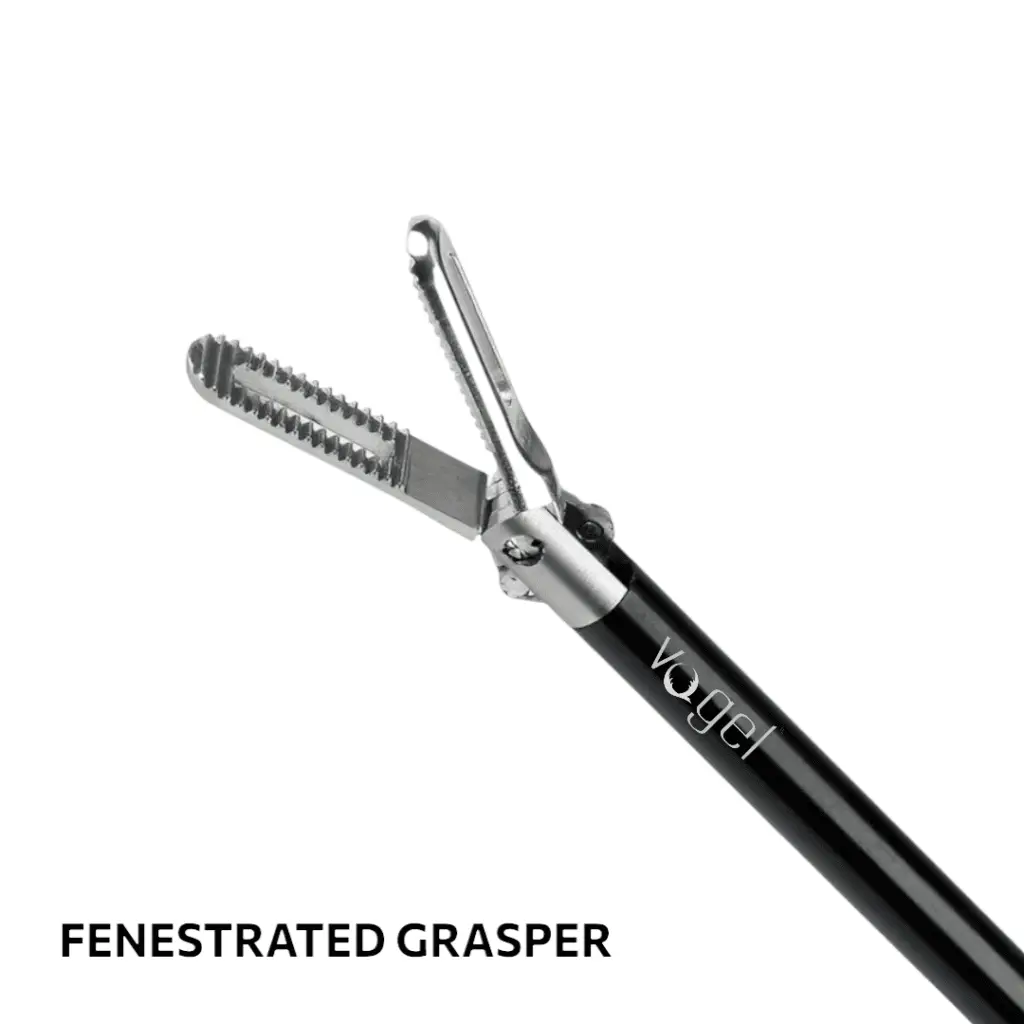
The two photographs below are original VOGEL media-library images. Their product shapes, handles, shafts and tips are not redrawn. They are examples for catalogue identification only; exact SKU identity and current manufacturer specifications should be confirmed before using the images in a purchase specification.
Original, unaltered VOGEL product photo. Exact configuration, indicated use, specifications and compatibility require the applicable model documentation.
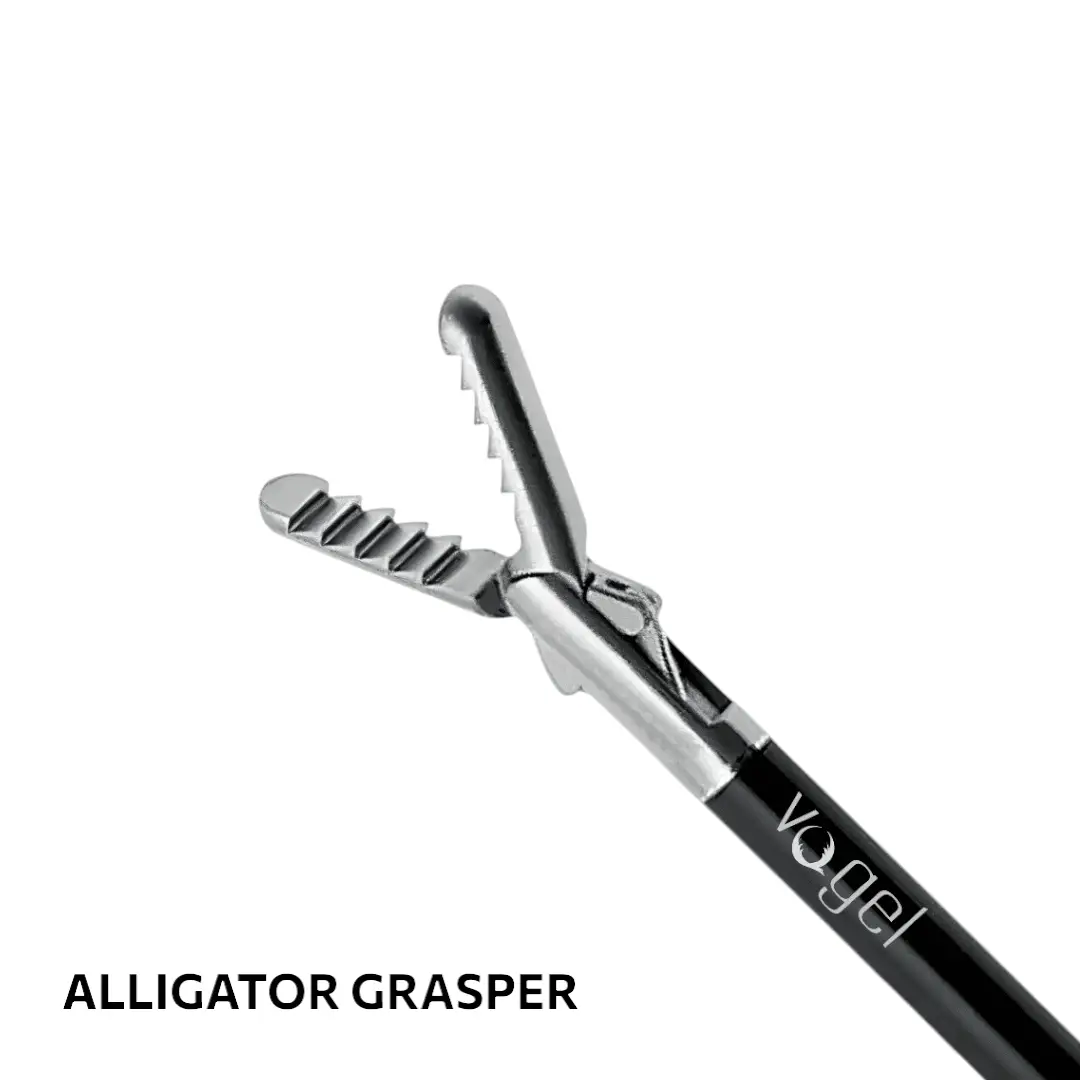
Original, unaltered VOGEL product photo. Exact configuration, indicated use, specifications and compatibility require the applicable model documentation.
Explore the verified VOGEL laparoscopy range to identify available instrument families. For a configuration-specific enquiry, contact VOGEL with a written list of the items, dimensions and documents needed.
A procurement example: replacing a damaged grasper
Imagine a hospital asks the purchasing office to replace a grasper that has failed inspection. The old purchase request names only a “laparoscopic grasper.” A responsible buyer should not choose the least expensive instrument with a similar photograph. Instead, the buyer can ask the department to identify the original model, functional jaw pattern and compatible components, and ask sterile processing whether the new product’s IFU can be implemented.
The resulting request can specify the item, relevant dimensions, approved substitution process and documentation needed before order release. This is an illustrative purchasing workflow, not a recommendation for a particular clinical case.
Use this laparoscopic grasper buying guide for a clearer quotation
A good laparoscopic grasper buying guide should end in a purchase specification that two different members of the team can interpret in the same way. Before requesting prices, write down the surgeon-approved task and working-end description, the model or item code, the shaft dimensions stated in the current catalogue, and the handle configuration. If any attribute remains uncertain, mark it as a question for the supplier instead of filling in a guessed value.
Where existing laparoscopic equipment is being retained, the hospital should identify the specific handles, inserts, shafts and any relevant connections already in service. Ask VOGEL to confirm the proposed instrument combination in writing. A common nominal diameter or a similar product photograph cannot establish compatibility, and a requested substitution should not be accepted without clinical and technical approval.
This laparoscopic grasper buying guide also helps teams compare quotations fairly. Two offers can list different accessories, packaging, replacement parts or support terms even when their descriptions appear similar. Ask for an itemized statement of what is included, the exact model’s current instructions for use, and the supplier’s written service and replacement terms before drawing commercial conclusions.
- Separate the approved clinical requirement from catalogue names and marketing descriptions.
- Keep the current model documentation alongside the quotation and procurement approval.
- Record unresolved fit, cleaning or service questions before issuing the purchase order.
For broader equipment planning, see the VOGEL laparoscopic instruments procurement checklist. Its hospital-level inventory planning complements the item-specific checks in this laparoscopic grasper buying guide.
Hospital request-for-quotation checklist
Before the order is placed, record these six actions and make the necessary clinical and technical approvals part of the purchase process. This makes the final bill of materials more useful than an informal email listing only a category name.
A useful laparoscopic grasper buying guide should help purchasing teams record a surgeon-approved jaw pattern, exact instrument configuration and written compatibility evidence. Refer to these requirements when comparing offers rather than relying on appearance alone.
- Request the surgeon-approved jaw pattern and a unique VOGEL item identifier.
- Specify compatible handles, shafts, inserts and energy interfaces where relevant.
- Record dimensions in the purchase order; do not rely on photograph scale.
- Obtain the current model-specific IFU and applicable written documentation.
- Request an itemized quotation with service, replacement and delivery terms.
- Ask clinical and processing reviewers to approve any proposed substitution.
Confirm the final quotation against the approved requirement, not merely the number of products listed. Any proposed substitution should be documented with the reason for the change and reviewed by the responsible clinical and technical teams. Product availability, prices and delivery terms should be confirmed directly with VOGEL for the specific order.
Sources and technical references
VOGEL links below are product and enquiry resources only. External FDA guidance is cited solely for general reusable-device documentation principles; it does not certify VOGEL products or establish regulatory approval outside the applicable jurisdiction.
Frequently asked questions
What is the first step in choosing a laparoscopic grasper?
Start with a documented clinical requirement for the exact working-end pattern and intended use, then confirm the matching SKU and compatibility information with the manufacturer.
Does a fenestrated grasper work for every tissue?
No universal clinical suitability can be inferred from fenestration alone. The surgeon must select a device consistent with its intended use, labeling and the particular clinical situation.
Are 5 mm graspers from different instrument systems interchangeable?
Not necessarily. Nominal size is only one dimension; verify shaft, insert, handle, seal and other relevant interface requirements using the current device documentation.
Should a hospital prefer a ratchet grasper?
That depends on the surgeon-approved functional requirement and model-specific design. Neither mechanism should be presented as universally preferable.
Where can buyers review VOGEL grasper options?
Start with VOGEL’s laparoscopy catalogue and identified listings, and request the exact model’s technical data, IFU and current supply terms before ordering.