

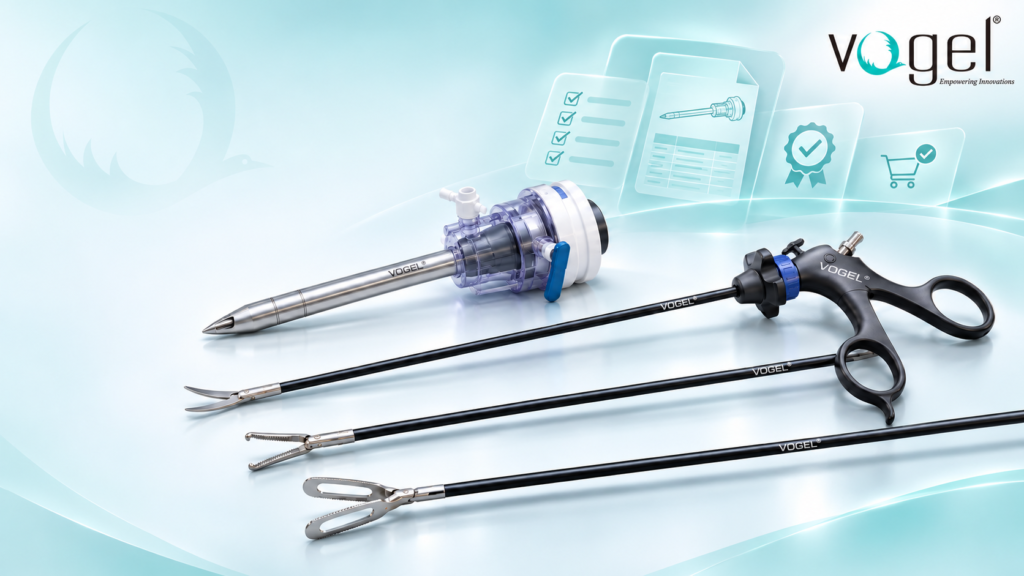
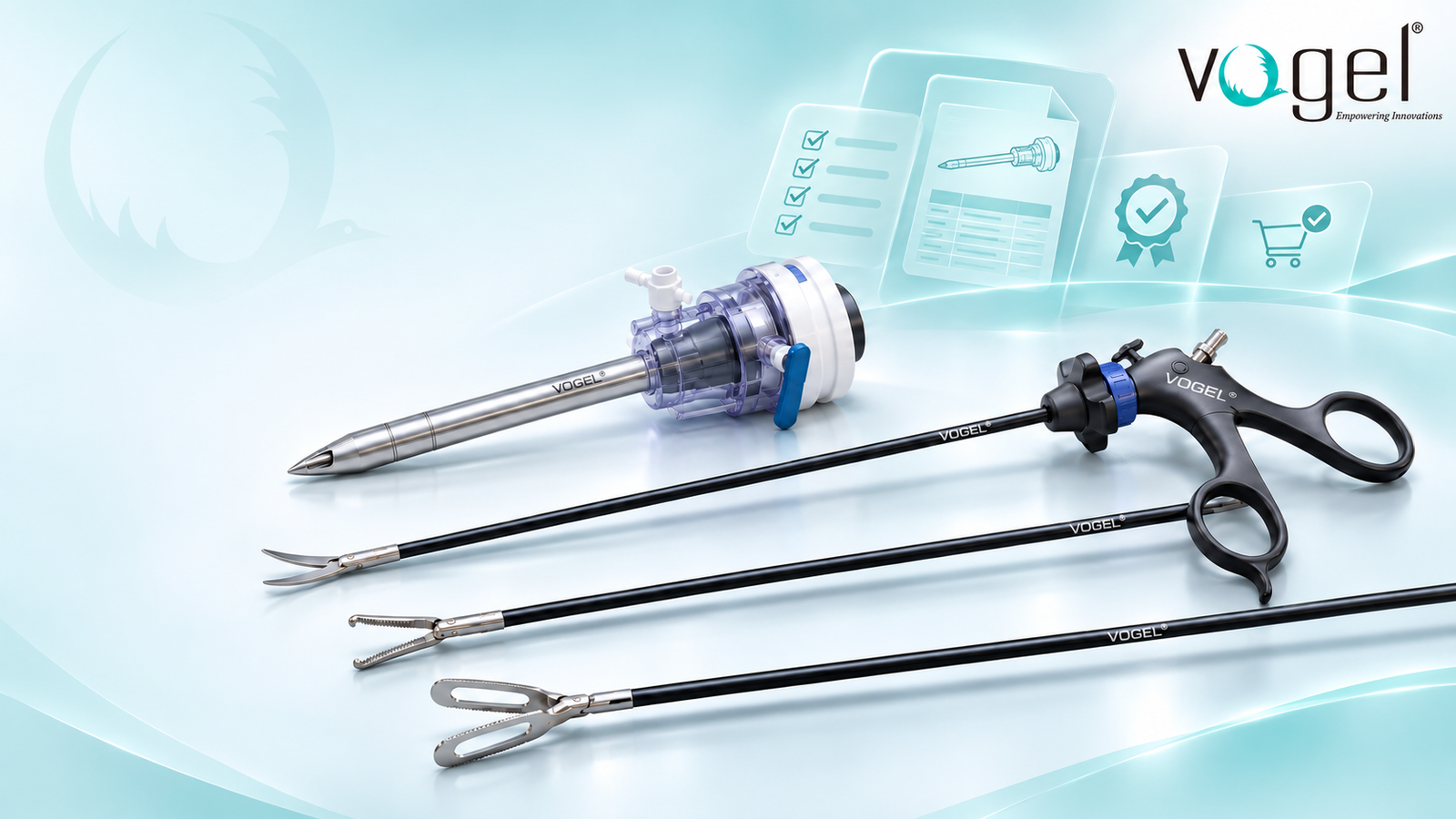
In hospital procurement, the hardest part is rarely finding an instrument name. It is making sure that the exact instrument, configuration and documentation fit the clinical team’s requirements and the facility’s workflow. This guide turns a broad laparoscopic instruments list into a purchasing framework that can be reviewed, quoted and checked before an order is placed.
Laparoscopic instruments list for hospitals
The following categories are commonly considered when planning a laparoscopic setup. This table is a starting point for a hospital-specific buying list, not a mandatory set for any operation. Required items, quantities and instruments must be determined by qualified personnel.
| Instrument family | Potential role in a setup | What the purchasing team must verify |
|---|---|---|
| Trocars and cannulas | Access for compatible laparoscopic instruments | Diameter, configuration, valve and seal compatibility; exact IFU. |
| Scissors | Cutting or dissection tasks when appropriate | Blade pattern, working length, shaft and energy-related labeling if relevant. |
| Graspers and forceps | Procedure-dependent holding or manipulation | Exact jaw pattern, intended use, handle configuration and dimensions. |
| Dissectors | Dissection or separation tasks | Working-end geometry, shaft requirements and preferred mechanism. |
| Needle holders | Suturing-related instrument handling | Needle and jaw compatibility, mechanism and clinician preference. |
| Electrosurgical instruments | Energy-assisted tasks if included in the approved plan | Generator, cable, insulation and device-level compatibility instructions. |
| Suction/irrigation systems | Procedure-dependent fluid management | Connectors, lumen specification and equipment compatibility. |
| Other accessories | Clip appliers, Veress needles, knot pushers and other selected tools | Evidence of actual procedural need and exact system compatibility. |
For a meaningful quotation, each requested line item should state the precise model or approved specification, quantity, size or configuration where applicable, and the person responsible for checking it. A vague request for “one grasper” can produce products with very different working ends.
Start with your hospital’s clinical requirements
A general-surgery theatre and a gynecology-focused facility may have different inventory requirements. Even within one department, a newly commissioned operating room, a replacement order and a back-up instrument purchase should not be handled in the same way.
- Have surgeons and relevant clinical leads identify which instrument families and patterns are required for their approved workflows.
- Review existing serviceable inventory before buying replacement or duplicate items.
- Record expected set usage, reprocessing turnaround and back-up requirements with the appropriate teams.
- Specify nominal dimensions, usable lengths, connection details and any accessories that must work together.
- Record documentation, inspection and service requirements alongside commercial considerations.
Original VOGEL instrument examples
Below are actual product images sourced from the official VOGEL WordPress media library. They are unaltered catalog images, not AI-redrawn instruments. The images illustrate different instrument categories; they do not establish procedure-specific suitability or represent dimensional scale.
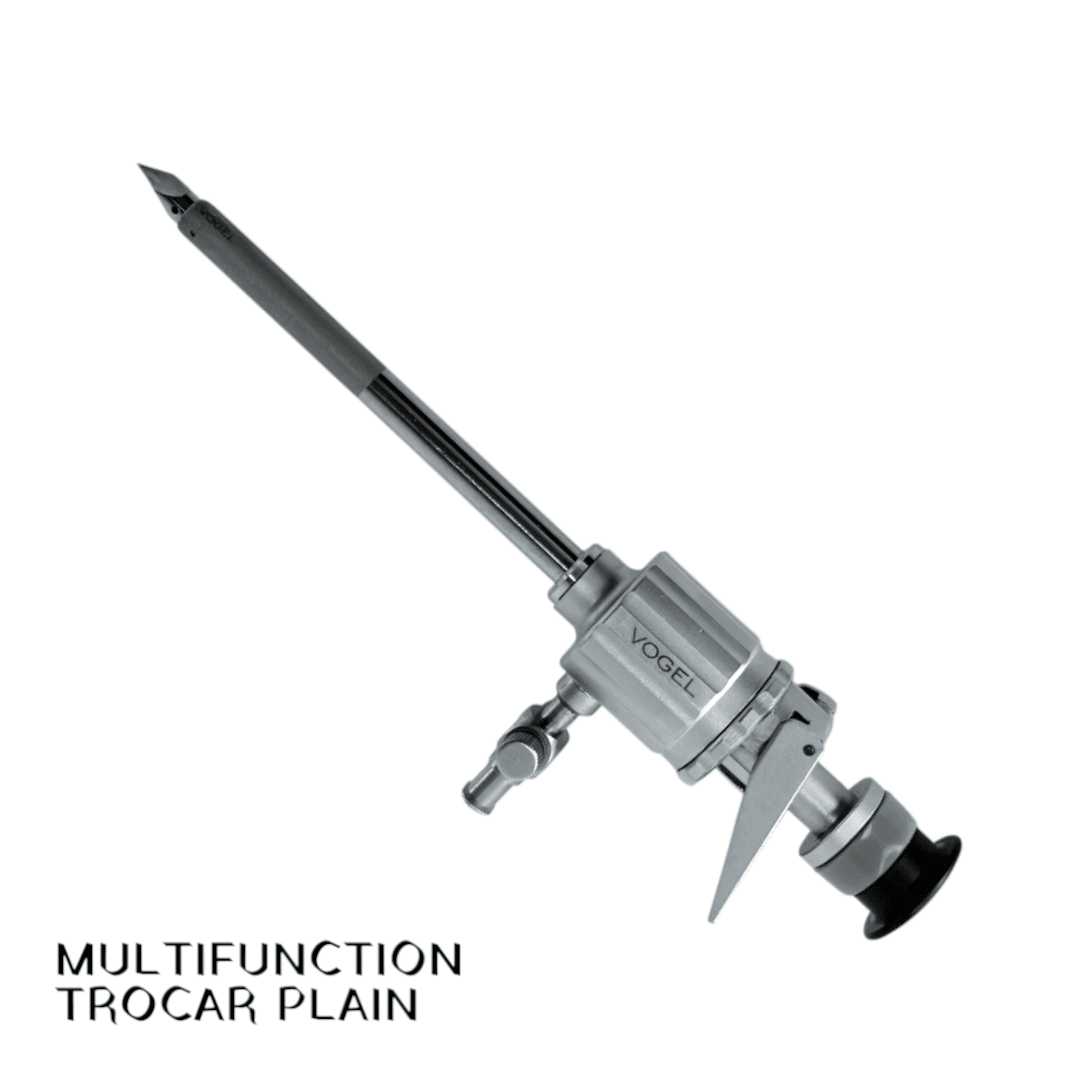
Multifunction Trocar
Confirm the precise diameter, configuration, sealing arrangement and compatible devices for the intended order.
View original VOGEL listing ↗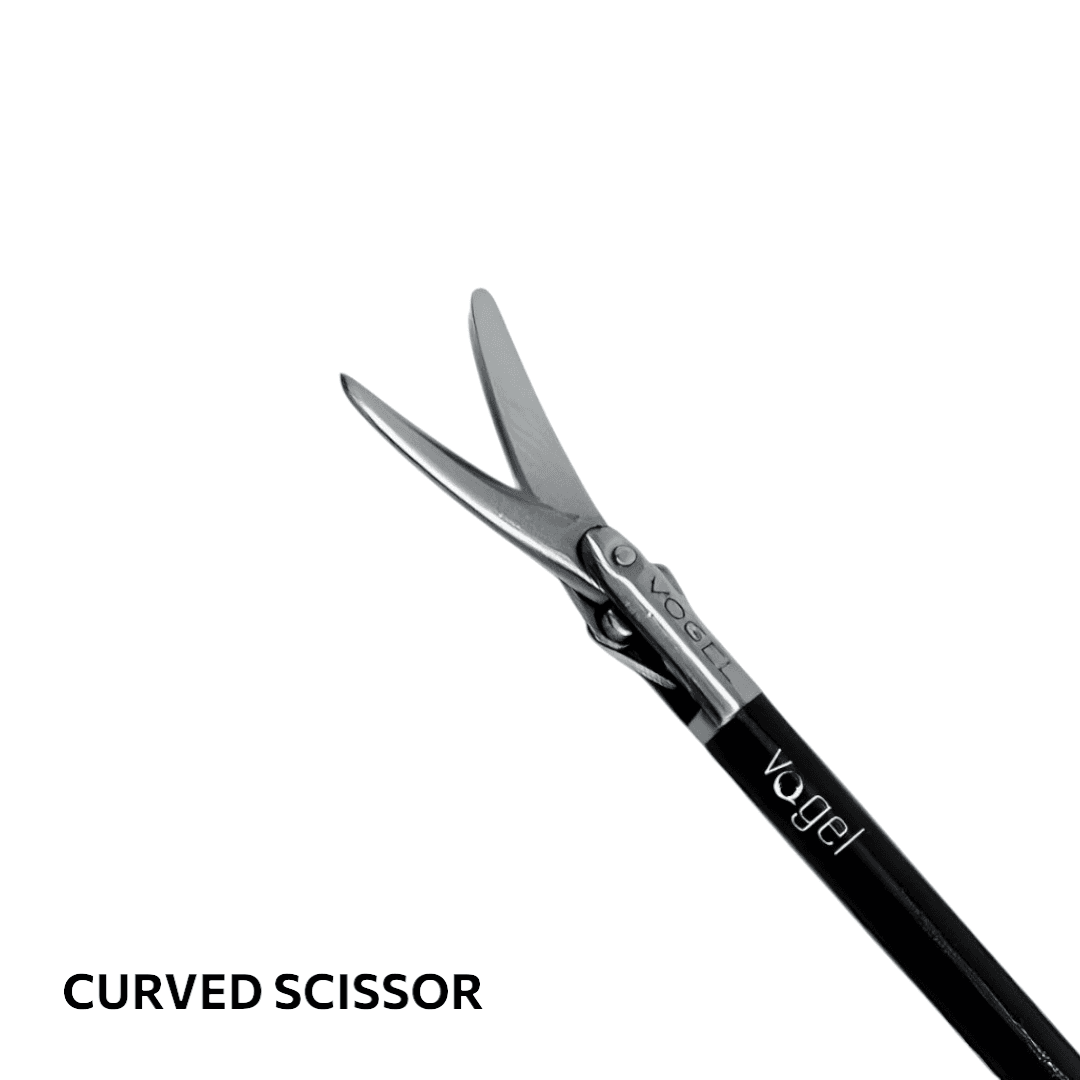
Curved Scissor
Specify the blade pattern, applicable shaft dimensions, handle preference and IFU requirements.
View original VOGEL listing ↗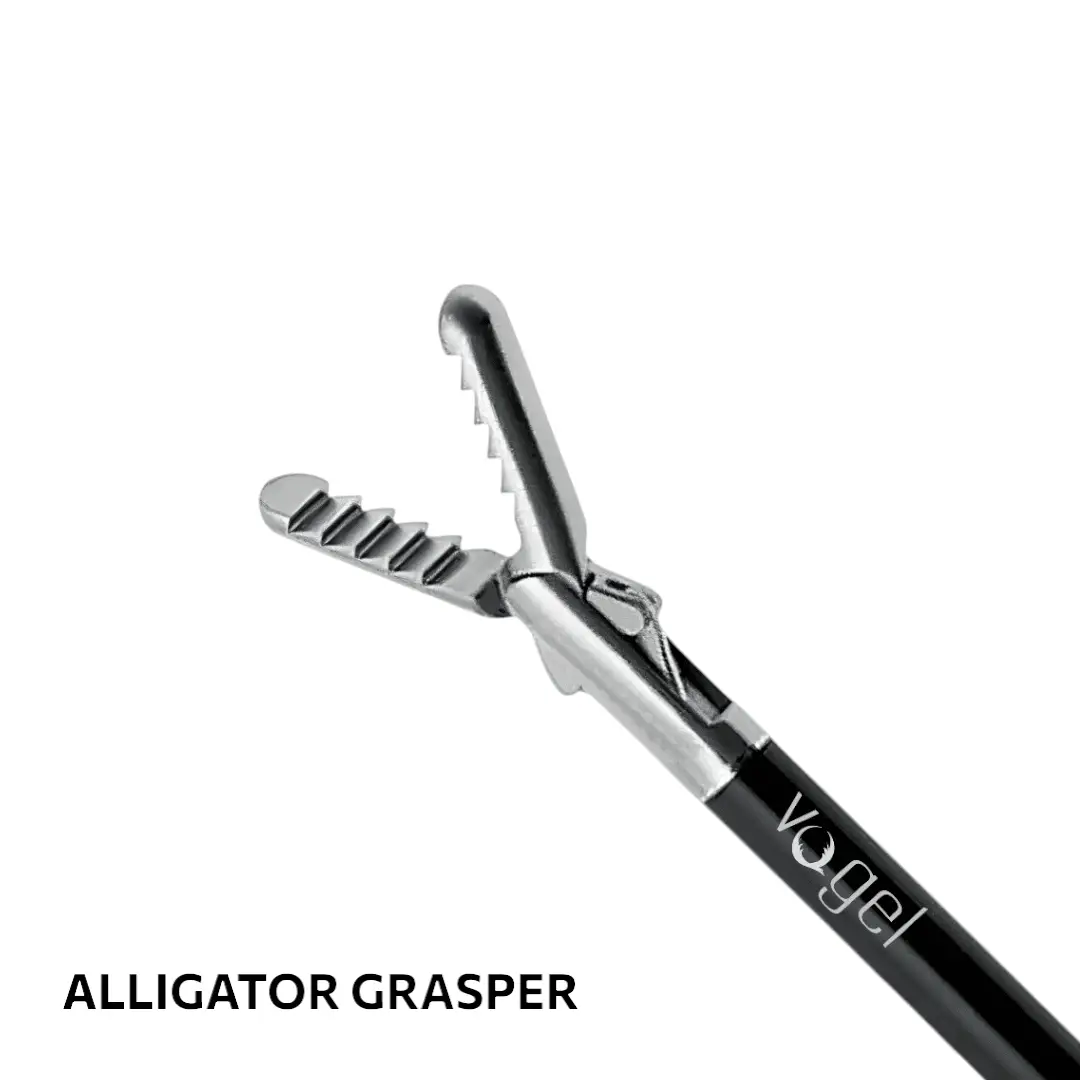
Alligator Grasper
Ask the surgical team to verify the intended gripping pattern, dimensions and working-end design.
View original VOGEL listing ↗Why exact variants matter
For example, VOGEL’s Multifunction Trocar listing describes different diameter and configuration options. A family listing should not be interpreted as a guarantee that every combination is supplied or compatible with every instrument. Ask for the current SKU, technical specification and the manufacturer-stated compatibility of the exact variant.
Likewise, curved scissors and alligator graspers are distinct instrument patterns. Any selection should be matched to the clinician’s written requirements, rather than inferred from appearance or general catalogue descriptions.
Compatibility and reusable-instrument considerations
Nominal 5 mm and 10 mm labels, similar handles or apparently matching connectors are not sufficient proof of interchangeability. The relevant device manufacturer must document the compatibility of the exact products. Where electrosurgical instruments are involved, clinical and biomedical teams must also review the applicable energy-system requirements.
For reusable instruments, buyers need the device-specific validated reprocessing instructions before accepting a product into service. The reprocessing team should be able to identify the item, understand any applicable disassembly and inspection requirements, and confirm that the facility can implement its validated process. A general website article must never be used to select sterilization times, temperatures or cleaning chemicals.
A precise request-for-quotation checklist
A useful request for quotation (RFQ) allows the seller and purchasing team to discuss the same identifiable item. Use the fields below as a starting template and adapt them to your procurement and clinical approval policy.
| RFQ field | Information to record |
|---|---|
| Instrument identity | VOGEL model/SKU or approved technical description. |
| Intended department | Clinical team, procedure family and approval owner. |
| Dimensions / pattern | Applicable shaft diameter, usable length, tip/jaw or blade configuration. |
| System fit | Required instrument, cannula, seal, accessory and equipment compatibility evidence. |
| Reuse and documentation | Applicable current IFU, product labeling and any documented processing requirements. |
| Quantity and support | Order quantities, spare parts/service contacts and replacement requirements. |
| Commercial terms | Itemized price, taxes, lead time, delivery location, warranty or service terms. |
| Review and release | Recorded clinical, sterile-processing and procurement approvals. |
A three-step hospital procurement workflow
Define requirements
Obtain the surgeon-approved procedure list, desired instrument patterns, dimensions and compatibility needs.
Request documented quotes
Ask for exact VOGEL item identification, technical documents, available variants, quantities and delivered pricing.
Verify before approval
Resolve substitutions and missing documentation; obtain appropriate clinical and purchasing sign-off.
Before confirming an order, review the final bill of materials against the approved specification. Document any substitution as a proposed alternative—not an assumed equivalent—and have the responsible reviewer accept or reject it explicitly. This improves purchasing clarity without making clinical suitability claims.
References and scope of evidence
VOGEL links above refer exclusively to VOGEL products. The external FDA and CDC sources below are included for general professional guidance about reusable-device processing, not as recommendations or endorsements of a particular VOGEL product. The applicable device instructions and local requirements remain controlling.
- VOGEL — Laparoscopy product portfolio (instrument families).
- VOGEL — Multifunction Trocar (catalogue information).
- U.S. FDA — Reprocessing reusable medical devices (general principles only).
- CDC — Cleaning in healthcare reprocessing (general principles only).
Frequently asked questions
What instruments are commonly included in a laparoscopic surgery set?
Depending on the procedure, the set may include access instruments such as trocars, graspers, dissectors, scissors, needle holders, forceps and supporting accessories. It is not a fixed list for all procedures. The responsible surgeon should approve the final configuration.
Are 5 mm and 10 mm laparoscopic instruments interchangeable?
Not automatically. Nominal size alone does not establish compatibility. Verify the specific instrument, cannula, seal design, accessories and manufacturer labeling for the intended system.
How many reusable laparoscopic instrument sets should a hospital buy?
There is no universal quantity. The decision should consider department needs, expected procedure volume, existing inventory, reprocessing turnaround and documented backup requirements.
What should buyers verify before purchasing reusable instruments?
Confirm the exact product identity, intended use, material and technical documentation where applicable, compatibility, validated device-specific reprocessing instructions, parts and service arrangements. A trained clinical and sterile-processing team should review relevant requirements.
Can hospitals order different instrument patterns from VOGEL?
VOGEL’s public laparoscopy catalogue lists multiple instrument families and patterns. Availability of each exact model, configuration and size must be confirmed with VOGEL before an order is approved.